Note-Taking Methods Compared (Cornell, Outline, Mapping, and a Seventh)
By Jim Breese · · Updated
What are the main note-taking methods?
The main note-taking methods taught by academic support centers are Cornell, Outlining, Mapping, Charting, and Sentence, according to the University of Tennessee at Chattanooga's Center for Academic Support. A sixth method, Boxing, groups related notes into visual boxes and shows up in note-taking communities rather than in a university guide, per a widely read r/NoteTaking thread covering six methods total.
Here is the full list in one place:
- Cornell: a cue column on the left, notes on the right, a summary at the bottom.
- Outlining: an indented hierarchy, general points at the left margin, details indented beneath.
- Mapping: a graphic layout that connects each idea to the ones around it.
- Charting: pre-drawn columns headed by categories, filled in as content arrives.
- Sentence: every new fact or thought on its own numbered line.
- Boxing: related notes grouped visually inside boxes instead of lines or columns.
Every one of these six methods has a real use case and a real limitation. The rest of this post goes through each one, then covers the gap none of them close and the method that has started to fill it.
What is the Cornell method?
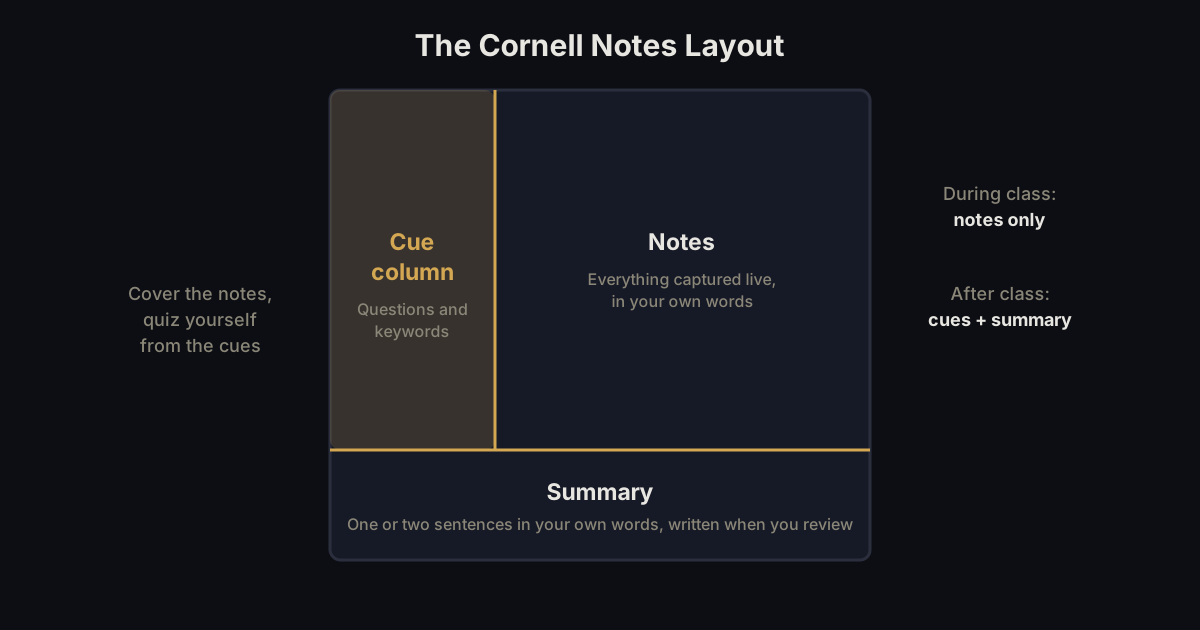
The Cornell method was developed by Walter Pauk, a Cornell University education professor, according to Cornell's own Learning Strategies Center, which cites his book How to Study in College as the source. No specific decade is claimed here, since Cornell's own page does not give one.
The layout is a single page split into three parts. A note-taking column takes up most of the page, about six inches wide, where you write during the lecture. A narrower cue column, about 2.5 inches, sits to the left and stays empty during class. After the lecture, you fill the cue column with keywords and questions pulled from your notes, then write a short summary across the bottom.
The University of Tennessee at Chattanooga's Center for Academic Support recommends Cornell for any lecture and calls it a "do-it-right-in-the-first-place system." Notably, it lists no disadvantages for Cornell, unlike every other method on its list. The tradeoff is upfront: the format takes a little setup and a review pass after class that the other methods do not require.
Get a Cornell notes template as PDF, Word, or Excel
The layout above, ready to use: a cue column on the left, a notes area on the right, and a summary section across the bottom.
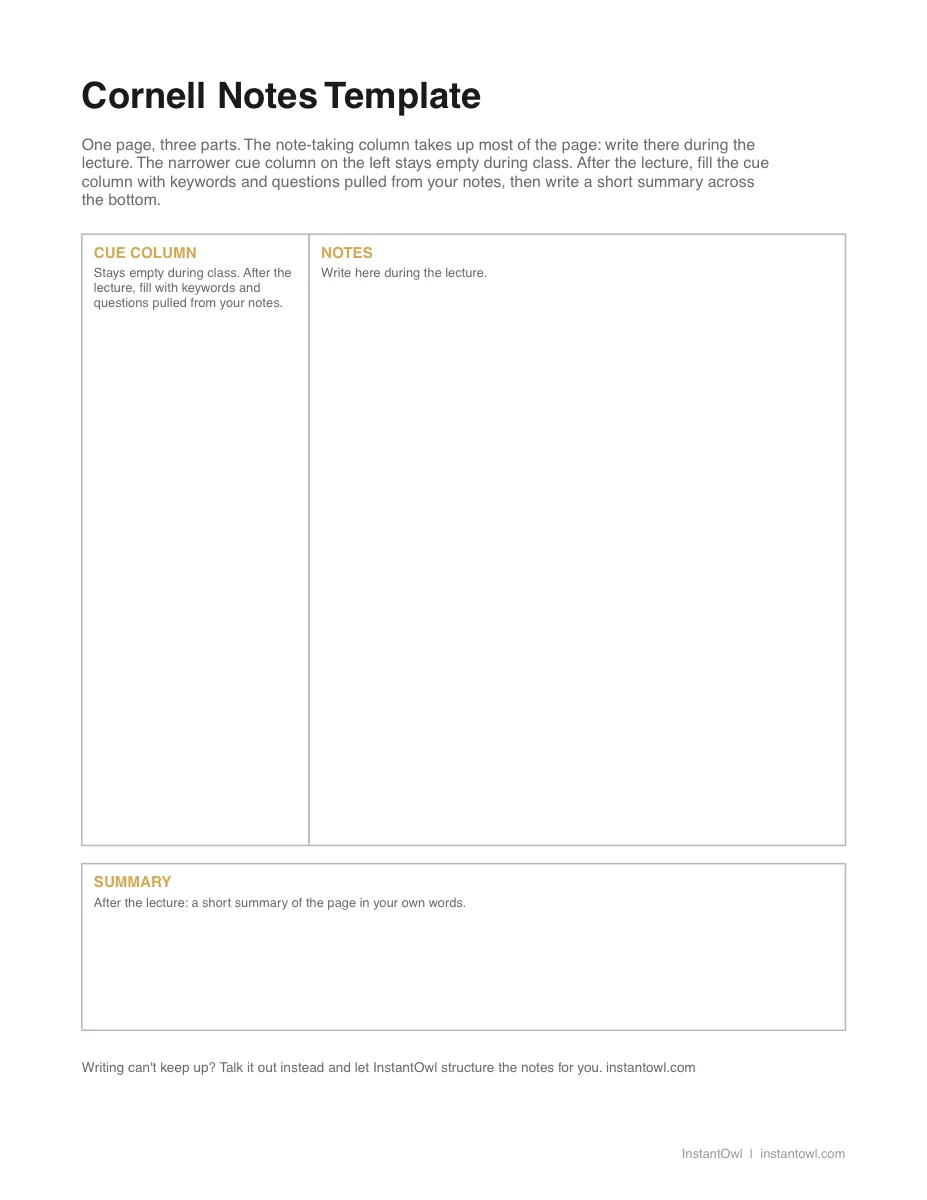
- PDF: print it or fill it on a tablet
- Word (DOCX): type your notes into it as a doc
- Excel (XLSX): for column lovers, cue and notes side by side
The DOCX and XLSX files open directly in Google Docs and Google Sheets, no download or conversion needed.
What are the other five note-taking methods?
The other five methods each trade organization for speed, or speed for organization, and the right one depends on how the material arrives. None of them work equally well in every situation, which is exactly why academic support centers teach more than one.
Outlining uses indentation to show hierarchy: the most general point sits at the left margin, and each supporting detail is indented beneath it. UTC recommends it for lectures already delivered in outline form, when you have adequate time and are already a confident note-taker. Its weakness is real-time thinking: a fast-moving lecture breaks the format before you can decide where a new point belongs.
Mapping is a graphic layout that relates each fact or idea to the others around it, rather than listing them top to bottom. UTC recommends it for content that is heavy but well organized, and for unpredictable guest lectures where a strict outline would not survive contact with the material. Its downside is that a map can miss the transitions between points, since the connections are visual rather than sequential.
Charting uses pre-drawn columns headed by categories, and you record new information straight into the matching column as it comes up. UTC recommends it for chronological or comparison-heavy content, especially when it is delivered quickly. The catch: you have to know your categories before the lecture starts, which is not always possible going in.
Sentence puts every new thought or fact on its own numbered line, with no indentation or grouping. UTC recommends it for organized but content-heavy lectures that do not group cleanly into categories. The cost shows up later: numbered lines do not distinguish a major point from a minor one, which makes the notes slow to review.
Boxing groups related notes visually inside boxes instead of lines or columns, according to the r/NoteTaking thread that lists it alongside the university five. It suits people who process information in clusters rather than in a straight line. Like the others, it still assumes you can see the structure clearly enough, while it is happening, to know which box a new point belongs in.
What does no note-taking method fix?
No note-taking method fixes the moment you cannot write fast enough or do not yet know the structure. Cornell needs a cue column filled in and a review pass after class. Charting needs categories chosen before the content shows up. Outlining and Sentence both assume the material arrives in a shape you can follow live. Mapping needs you to already see how the ideas connect to each other.
This is not a hypothetical gap. In the same r/NoteTaking thread, one commenter, a meeting note-taker, wrote that their "handwriting gets pretty bad" once they start writing fast, and said they planned to try Cornell next. Another commenter said the method that actually worked for them was simply taking daily notes, because their own thoughts are "always unstructured" to begin with.
Picking a method by learning style is not a reliable shortcut either. One commenter in that same thread linked an article from the University of Michigan's Center for Academic Innovation that describes learning styles as a debunked idea, arguing that a personal preference is real but a fixed "style" is not something the evidence supports. The better filter is the material and the time available, not an identity you assign yourself.
Put together, six well-documented methods all share the same blind spot: they assume real-time writing speed and real-time structural judgment. When either one runs out, before the structure is clear, before the hand keeps up, the method stops helping and the notes turn into a scramble to keep up with what is being said. That is not a flaw in any one method; it is the core speed problem behind all note-taking, where thought and speech run about ten times faster than the hand can write.
What is the seventh method: talk first, structure after?
The seventh method is to capture everything by voice first, then let structure get built afterward, instead of writing and organizing in the same moment a thought or lecture point arrives. Real note-takers are already doing this on their own, without anyone selling it to them as a method.
In the r/NoteTaking thread, one commenter said they had started "experimenting with recording my notes instead of writing everything down," using an AI tool called VOMO to transcribe and summarize the recording afterward, and called it "easier to review." A second commenter, independently, said they use an app called AudioNotes because it "structure[s] the notes very well and summarizes on point." Two separate people, in the same community, reached the same workaround without being asked to.
The method itself is simple: talk through the lecture, meeting, or idea as it happens, capturing everything at full speaking speed instead of writing speed; for students, there is real study science behind talking it through. Afterward, review the structured output the way you would review Cornell's cue column, checking the summary and pulling out what actually needs to be remembered or acted on. Capture and structure become two separate jobs again, done at two different times, which is the same trick Cornell already uses between the note column and the cue column, just moved to before the writing starts instead of after it.
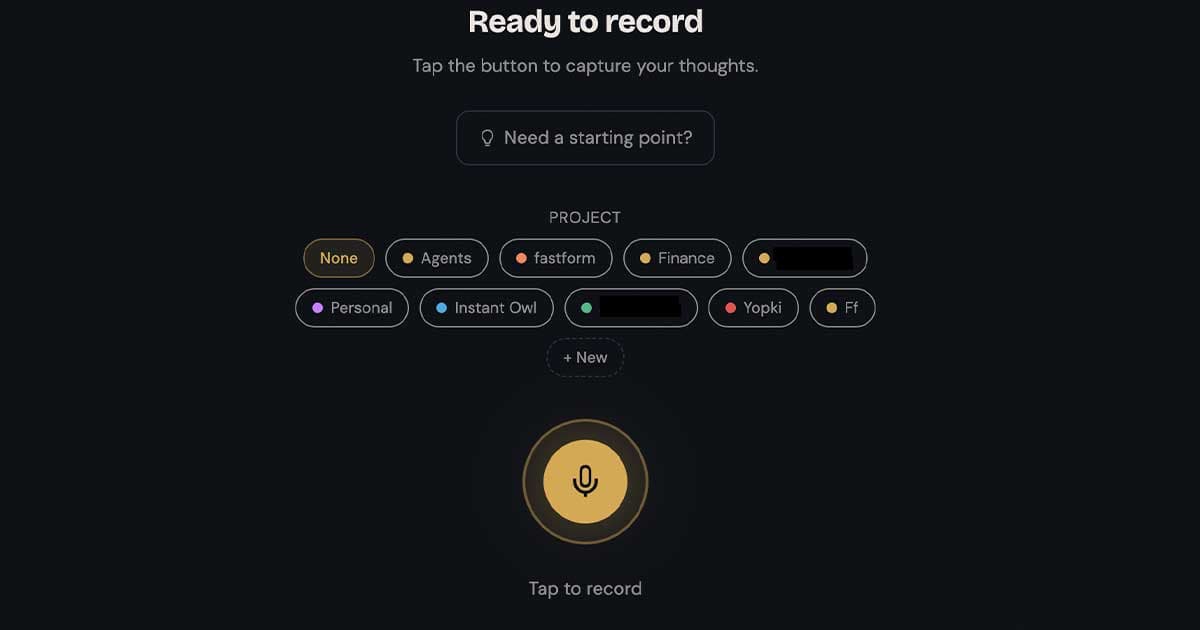
Full disclosure: InstantOwl is our product, and this is where it fits. Talk instead of type, and one recording turns into organized output instead of a raw transcript: notes with structure, tasks pulled out automatically, and the option to regenerate the same recording into a different format if you need one. InstantOwl is currently free to use.
How do you pick a note-taking method?
Pick by situation, not by identity. The material in front of you, and how much time you have to prepare or review, matters more than which method you have used before.
For a live lecture, when the professor sets the pace and you cannot control how fast the material arrives, see how to take lecture notes for the method-by-method breakdown built for that exact situation. For a meeting, where the goal is usually a decision and a task list rather than a full transcript, see how to take meeting notes. For personal thinking, when there is no lecturer or agenda and the real problem is a jumble of your own ideas, see how to organize your thoughts. For fast-moving work notes across standups and reviews, a product manager's running capture hits the same speed problem every method here runs into.
If the real problem is that a thought disappears before you can open a notebook at all, the method matters less than the speed of capture. That is the case covered in the best note-taking apps for ADHD, where instant capture, not better structure, is the actual fix; for the classroom version of the same problem, a randomized study of note-taking for ADHD students found that notes in any format beat no notes at all.
Whichever method fits the moment, InstantOwl is built for the version of this problem where writing, in any format, is the bottleneck: talk it out, and get back something organized instead of a page you still have to structure yourself.
Frequently asked questions
What is the most effective note-taking method?
There is no single most effective note-taking method, because effectiveness depends on the material and the time you have, not a personality trait. The University of Tennessee at Chattanooga's Center for Academic Support pairs each of its five taught methods (Cornell, Outlining, Mapping, Charting, Sentence) with the situation it fits best, rather than naming one winner. Pick by the shape of the content in front of you: organized and slow favors Cornell or Outlining, fast and unpredictable favors Charting or talking it out first.
What is the Cornell method?
The Cornell method is a note page split into a wide right-hand column for notes taken during a lecture, a narrow left-hand cue column added afterward for keywords and questions, and a short summary at the bottom, per Cornell University's own Learning Strategies Center. It was developed by Cornell education professor Walter Pauk, cited to his book How to Study in College.
What are the 5 methods of note-taking?
The five methods commonly taught by academic support centers are Cornell, Outlining, Mapping, Charting, and Sentence, according to the University of Tennessee at Chattanooga. A sixth, Boxing, which groups related notes into visual boxes, shows up frequently in note-taking communities alongside the original five.
Should you pick a note-taking method based on your learning style?
No. The concept of fixed learning styles has been debunked; the University of Michigan's Center for Academic Innovation describes it as a myth, noting that a personal preference is real but a rigid style is not supported by evidence. Pick a note-taking method based on the material and the time you have instead, for example Charting for fast comparison-heavy content or Cornell for an organized lecture with time to review.

Written by
Jim BreeseJim Breese is the founder of InstantOwl. He's spent 15 years building companies, from an Airbnb host community he founded and exited to growth leadership at venture-backed SaaS startups. He built InstantOwl because his best ideas kept arriving mid-walk, out of order, and half-finished.
Stop losing good ideas.
InstantOwl turns a rambling voice note into a clean, organized document in moments. Just talk. We'll organize it.
 Try InstantOwl free