How to Take Lecture Notes: Before, During, After (and the Recall Trick)
By Jim Breese · · Updated
How do you take good lecture notes?
Good lecture notes come from three separate phases: prepare before the lecture, capture selectively during it, and process what you wrote after it ends. Trying to do all three at once, typing or writing down everything the professor says in real time, is why so many students give up on note-taking partway through a lecture. Each phase does a different job, and skipping one weakens the other two.
Preparation gives you context so you already recognize what matters when you hear it. Selective capture during the lecture keeps you listening instead of typing on autopilot, chasing every sentence. Processing afterward, whether that means rewriting your notes or trying to recall the lecture from memory the next day, is the phase that actually moves the material into long-term memory.
Before the lecture: read ahead and know the outline
The single most repeated piece of advice from students is to do the assigned reading before the lecture, not after it. One student on r/college put it simply: doing the reading first means "I know what's important" once the professor starts talking, because the structure is already familiar. A professor answering in the same thread agreed, saying it is easier to organize what you are hearing and pick out the important points if you have already seen the material once.
If your professor posts slides ahead of time, print them or pull them up and review them before class. Highlight whatever the professor tends to emphasize in past sessions, then treat the slides as your outline during the lecture itself. The only thing you write down live is what the professor adds that is not already on the slide. This single habit frees up attention for listening instead of copying words that are already sitting in your slide deck.
Either version of preparation does the same job: it turns the lecture from the first time you are encountering the material into the second time, which is a much easier position to take notes from.
During the lecture: capture selectively, don't transcribe
You cannot write down every word a professor says, and trying to is the fastest way to fall behind. LSE's official guide to lecture note-taking puts it directly: focus on key points, arguments, and themes rather than a word-for-word record, and don't worry about missing something small since the goal is the main structure of the lecture, not a transcript of it.
LSE's guide also has practical habits worth borrowing. Underline, highlight, or capitalize whatever the professor visibly emphasizes, since that is usually the point they consider most testable. Use shorthand and abbreviations instead of full words: LSE suggests "2" for to, too, or two, "w/" for with, and "btw" for between. Put your phone away and disable WiFi before the lecture starts, since even a silenced phone on the desk pulls attention away from what is being said.
LSE's guide adds two more habits that are easy to skip: sit somewhere that actually helps you focus, and ask questions when you are confused, either in the moment or at office hours afterward, rather than letting the gap sit unresolved until an exam. Comparing notes with a classmate after class also catches what either of you missed.
One more rule matters more than any shorthand trick: always write down anything the professor puts on the board or the slide, word for word. A student on r/college framed the deeper goal well: the point of lecture notes is not to capture everything said, but to leave yourself enough that you can recreate the lecture's main takeaway later, built around the theme the professor was actually building toward.
If you want a structured page layout instead of a running list, the Cornell method (a narrow cue column for keywords, a wide column for notes, and a short summary at the bottom) is a well-known option for lectures with a clear structure and enough time to review. It is one of several layouts worth knowing, covered in full in our note-taking methods comparison, so we won't repeat the details here.
After the lecture: the two-pass rewrite, and a next-day trick
The most common student workflow is a two-pass process: type or write fast and messy during the lecture, capturing slide content and anything the professor adds, then rewrite the notes into an organized form afterward. Students who do this describe the rewriting itself as the part that makes the material stick, not the original capture.
Handwriting versus typing during the lecture matters here too. One professor who answered student questions on r/college noted that handwriting has been shown to help people process and remember information better than typing does, but conceded that if you cannot write fast enough by hand, typing plus a deliberate review afterward wins out. He said he switched to typing lectures himself for exactly that reason: he could not keep up by hand.
There is a stronger version of the after-lecture pass worth trying, and it runs against the instinct to write more, not less. Data scientist Neeraj Krishna argued in a widely shared essay that transcribing a lecture in real time, then reading the transcript before an exam, does not require the brain to do any real work. His alternative: during the lecture, jot only brief cues, key concepts or open questions, nothing more. Then, the next day, before looking at those cues again, write down everything you remember about the lecture from memory.
Krishna ties this to the "forget-to-learn theory" described in Benedict Carey's book How We Learn: the act of retrieving a memory, even an imperfect one, strengthens it more than re-reading a polished version ever does. Practically, this means the next-day recall pass is not a nice extra step, it is where the actual learning happens, more than the original note-taking was. Retrieval practice is one of a handful of research-backed memory techniques; if your real goal is to remember facts cold rather than just take good notes, testing, spacing, and vivid encoding matter as much as any single recall trick.
Can you record lectures?
Only if your syllabus allows it or your professor gives you permission first. This is not a formality to skip. Some institutions record lectures automatically, so there is nothing for you to arrange. LSE's own guide mentions this directly: lectures are recorded at LSE, so a student can always go back and check a point they missed, which is part of why LSE's guide focuses on selective note-taking rather than trying to catch every word live.
Where a lecture is not officially recorded, the decision to record it yourself is not automatically yours to make. Some institutions require that everyone in the room or on the call be informed before a recording starts, and there can be policy, contractual, or accessibility reasons a professor says no. Recording is also a common accommodation granted through a disability office for students who need it, which is one more reason it goes through a request rather than a personal decision made on the spot.
The honest version of student advice on this, seen phrased as "if you can record your lectures, record them" and "if it's possible to record do so," already carries the conditional built in: permission first, then the recording. Check your syllabus, and ask the professor directly if it isn't stated there; our guide to voice notes for students covers these recording rules in full, along with the free tools that already handle the capture. Recording without permission because it would be convenient is not worth the risk to your standing in the class, and it can put you on the wrong side of a policy you never actually checked.
The consent-free version: a spoken recall debrief
Full disclosure: InstantOwl is our product, and this blog belongs to it. We'll keep this part short.
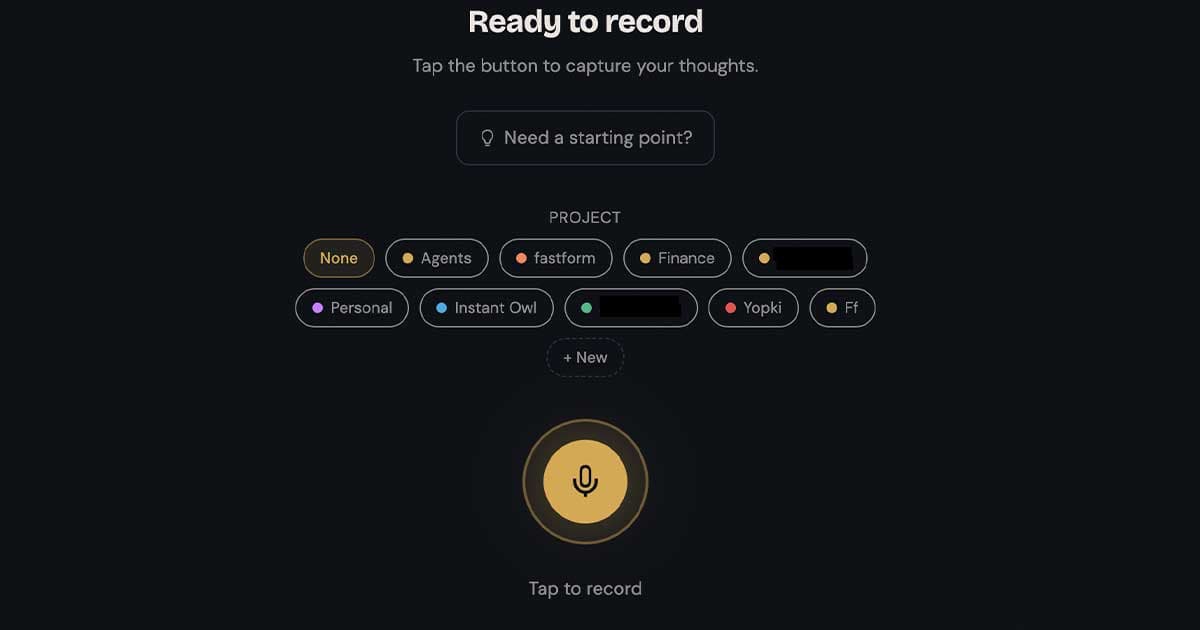
The next-day free-recall method above works because retrieving a memory from scratch strengthens it. You do not need a notebook to do that retrieval, and you do not need to record the lecture or the professor to do it either. Walk out of the lecture hall and speak your own recall of the lecture's main theme and any open questions, out loud, for a few minutes, before you look back at your notes.
That short spoken debrief is retrieval practice on its own, done with your voice and nobody else's. It sidesteps the whole recording-permission question, since you are recording yourself thinking, not the professor talking. Run that recall through InstantOwl afterward and it comes back as an organized note instead of a rough voice clip you have to sort through yourself. InstantOwl is currently free to use.
Related reading
- Note-taking methods compared: Cornell, Outlining, Mapping, Charting, Sentence, and Boxing, laid out in full.
- The best note-taking apps for ADHD: honest picks for when a thought disappears before you can write it down.
- Note-taking for ADHD students: what a real randomized study found about what helps in lectures, and what it didn't.
- Voice Memos: the complete guide: what Apple's built-in recorder does and does not do for you.
Frequently asked questions
How do I take notes faster in lectures?
Read the assigned material or the professor's slides before the lecture, so you already know the outline and only need to write down what the professor adds. Use shorthand for common words (2 for to/too/two, w/ for with), underline or capitalize whatever the professor visibly emphasizes, and write down anything put on the board word for word. Slowing down to write full sentences is what makes note-taking feel too fast to keep up with.
Should I record lectures?
Only if your syllabus allows it or your professor gives you permission. Some universities, like LSE, record every lecture officially, which removes the need to record on your own device at all. Where there is no official recording, ask the professor first. Some institutions require everyone on the call or in the room to be informed before recording, and recording without permission can violate university policy.
What is the best note-taking method for lectures?
There is no single best method, since it depends on the class and how fast the professor talks. The Cornell method (a cue column, a notes column, and a summary) works well for organized lectures with time to review. For lectures where writing can't keep up, jotting brief cues during class and doing a fuller pass afterward, on paper or out loud, tends to work better than trying to transcribe everything live.
Should I rewrite my lecture notes?
Yes, in some form. The most common student workflow is typing fast and messy during the lecture, then rewriting organized notes afterward, since the rewriting itself is what helps the material stick. A stronger version, backed by the forget-to-learn theory in Benedict Carey's book How We Learn, is to wait until the next day and write down everything you remember from memory before checking your original notes.

Written by
Jim BreeseJim Breese is the founder of InstantOwl. He's spent 15 years building companies, from an Airbnb host community he founded and exited to growth leadership at venture-backed SaaS startups. He built InstantOwl because his best ideas kept arriving mid-walk, out of order, and half-finished.
Stop losing good ideas.
InstantOwl turns a rambling voice note into a clean, organized document in moments. Just talk. We'll organize it.
 Try InstantOwl free