What Is a Brain Dump (and How to Do One)
By Jim Breese · · Updated
What is a brain dump?
A brain dump is getting every thought out of your head and into one place, with no sorting and no judging while you do it. You capture everything first and decide what matters afterward. The point is an empty head, not a finished list.
The name is literal: you take what is in your brain and dump it out. It can be a page, a note app, a whiteboard, or a voice note you record on your phone. If you want a starting structure instead of a blank page, a brain dump template gives you categories to fill in rather than a blank space to stare at.
"Mind dump" and "thought dump" mean the same thing. All three describe unfiltered capture, the opposite of a to-do list, which is already sorted and prioritized. A brain dump comes before that sorting, not instead of it.
Why does a brain dump lower stress?
A brain dump lowers stress because holding an unfinished thought keeps part of your mind on alert. Psychologists call this the Zeigarnik effect, first documented by Bluma Zeigarnik in 1927: research suggests unfinished or interrupted tasks tend to stay active in memory longer than completed ones, so they keep tugging at your attention until they're resolved or written down.
Writing the thought down, or saying it out loud into a recording, closes the loop. Your brain stops rehearsing it because it no longer has to hold it. This is sometimes called cognitive offloading: moving a thought from working memory into an external place you trust to keep it. That is the honest answer to half of how to remember things: the tasks and stray ideas you should never try to hold in your head at all, as opposed to the facts you actually need to memorize.
The relief shows up fast because it is not really about productivity. Twenty open thoughts each cost a slice of attention. Get them out of your head and that attention comes back immediately.
How do you do a brain dump?
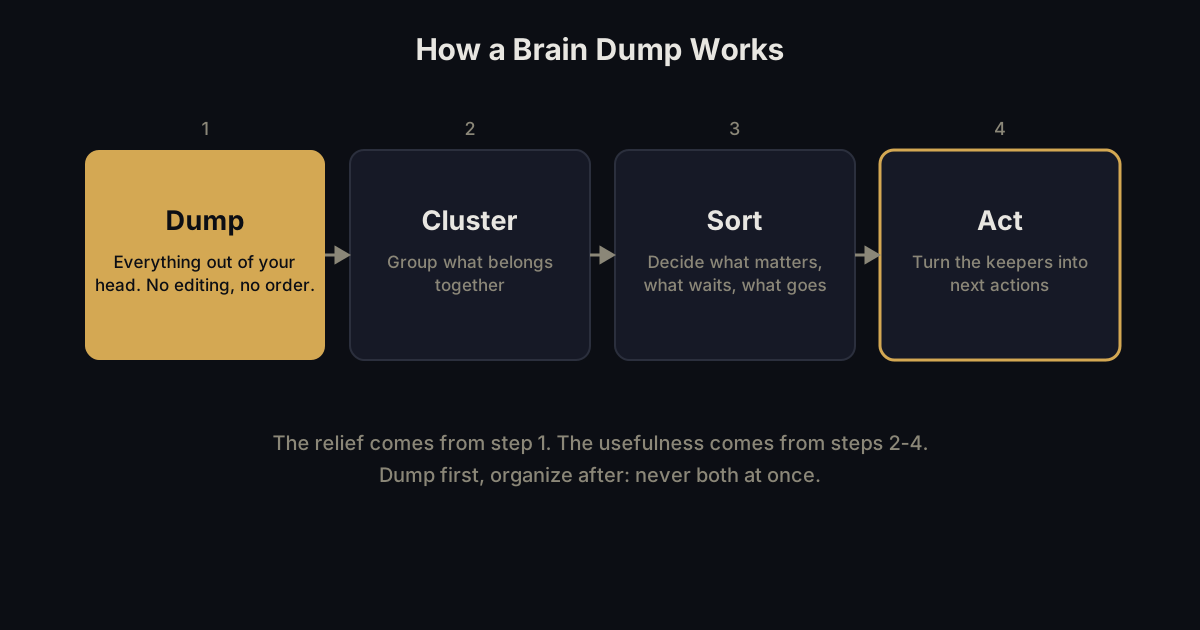
You do a brain dump in two separate phases: capture everything, then organize it. Keeping the phases apart is what makes it work. Sorting while you capture is the single most common way people stall out and quit.
- Pick one spot. A page, a note, or a recording. One place, so nothing scatters across five apps.
- Set a timer for five to ten minutes. A limit makes it feel doable and stops you from overthinking where to start.
- Get everything out, unedited. Tasks, worries, half-formed ideas, random reminders. Do not stop to fix, rank, or judge anything. Messy is correct here.
- Stop when the timer ends. The goal is an empty head, not a complete inventory. You will never get everything, and you do not need to.
- Sort after, separately. Split the pile into three buckets: things to do, things to keep, and things to drop. Most of what you dumped will not need action, and seeing that is most of the relief.
Capture is a creative act. Sorting is a critical one. Doing both at the same time is what jams people up, so keep them apart. That separation is the same rule the brainstorming literature landed on decades ago: defer judgment while the ideas are still coming out. And when the goal is generating new ideas on purpose rather than emptying your head, structured brainstorming techniques pick up where a brain dump stops.
What is a 5 minute brain dump?
A 5-minute brain dump is a timed capture session where you get out every thought you have for five straight minutes, then stop, no matter how it feels. The time limit is the entire trick: it removes the pressure to be thorough, which is usually what keeps people from starting at all.
Five minutes is short enough to fit into a real day: before a meeting, in a parking lot, waiting for coffee. It is also long enough to clear the loudest, most recent thoughts, which are usually the ones causing the most low-grade static.
If five minutes clears the surface but you still feel full, do a second round later. A daily five-minute habit tends to beat a rare one-hour session, because small thoughts get cleared before they pile up.
What are some good brain dump prompts?
Good brain dump prompts target the categories your mind actually holds onto, since a blank "write everything" instruction is often too open to be useful. Work through a handful of prompts like these instead of staring at empty space:
- What am I forgetting or afraid I'll forget?
- What is bothering me right now, big or small?
- What am I waiting on someone else for?
- What do I want to build, try, or start?
- Who do I owe a reply, a call, or a decision?
- What keeps interrupting my focus today?
A brain dump example from one of these might look like: "call the dentist, pitch idea for the newsletter, still owe Sam a reply, worried about the Thursday deadline, want to look into that new espresso machine." No order, no editing, just out.
Should you type it, write it, or say it?
Use whichever method is fastest for you, because speed is what keeps a thought from slipping away before you capture it. Handwriting feels calming to some people. Typing works well if you type quickly. Talking, whether into a recorder or through dictation software, is the fastest of all, and it is the only method that can keep pace with a mind that moves faster than your hands. Because it needs no screen, it is also the only method that works while you are driving, walking, or cooking.
Speaking is underrated for brain dumps specifically. Most people talk about three times faster than they type (a Stanford HCI study measured speech at three times the speed of typing on a phone keyboard), they can do it while walking or driving, and there is no blank-page friction to push through first. The catch has always been that a voice recording is a mess to sort through afterward, even once you turn it into text, which is why so many people default back to typing despite it being slower.
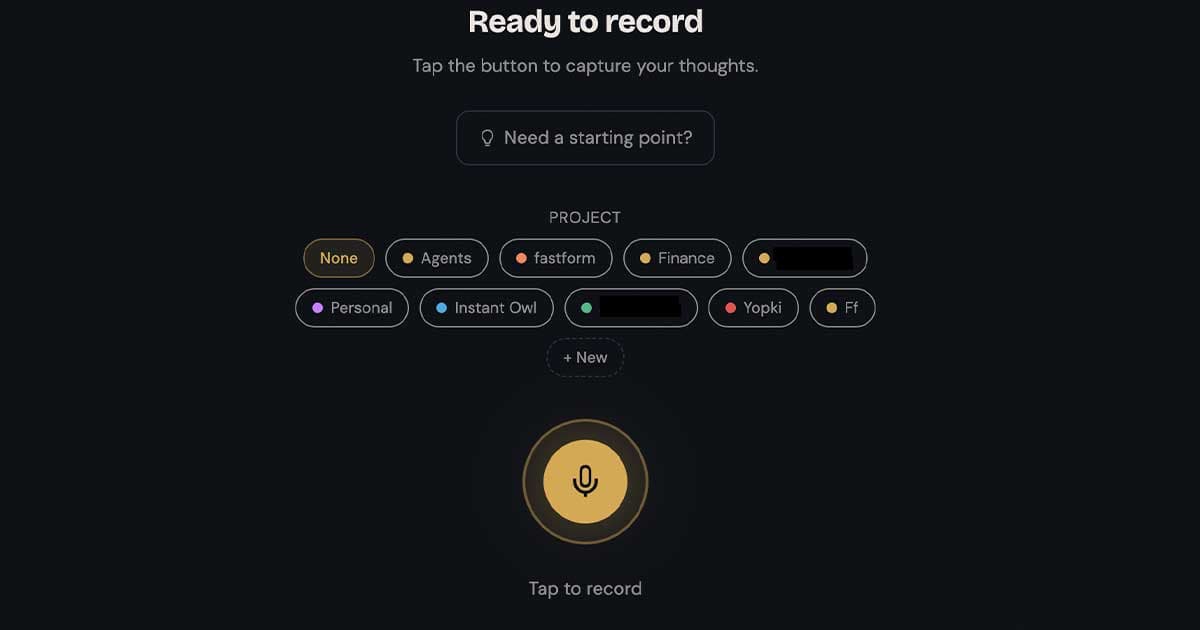
That is the specific gap InstantOwl was built to close: you talk, and it turns the ramble into an organized list of tasks, notes, and ideas you can actually use. Capture stays as fast as talking, and the sorting phase happens for you instead of sitting on your to-do list.
Does a brain dump help with anxiety?
Yes. Holding unfinished thoughts keeps part of your mind on low-grade alert, and that alert state is a close cousin of anxiety even when nothing is actually going wrong. Getting the thoughts out of your head and into a place you trust switches that alert off.
A brain dump will not resolve the thing you are worried about. It will not answer the email or finish the project. What it does is stop the worry from also costing you attention while it sits unresolved, which is usually most of the weight.
This matters even more for a mind that generates thoughts faster than it can process them. If a worry or a good idea only exists in your head and vanishes the moment you get distracted, a habit like an ADHD brain dump built around instant capture matters more than a habit built around neat capture.
Common brain dump mistakes
The two mistakes that ruin a brain dump are organizing too early and aiming for complete. Sort while you capture and you kill the momentum. Try to get everything and you never feel done, so you either quit early or never start.
A third mistake is dumping into a place you never revisit. An unsorted brain dump is just a pile, and a pile you never look at again is not much different from the thoughts staying in your head. Build in the second phase, even a rushed two-minute pass to sort the pile into order, so thoughts become action instead of a longer list to feel guilty about.
Keep it low-stakes. A brain dump is not a plan and it is not a system, it is a release valve. Do it when your head feels full, get everything out, sort quickly, and move on with your day.
Related reading
- Brain dump template: a ready-made structure if a blank page is the friction point.
- Brain dump journal: how brain dumping compares to reflective journaling, and when to use each.
- ADHD brain dump: why fast, judgment-free capture matters most for a racing mind.
Frequently asked questions
What is a brain dump?
A brain dump is the act of getting every thought in your head out into one place, whether that is a page, a note, or a voice recording, without stopping to sort, edit, or judge any of it. You capture first and organize later. The goal is an empty head, not a neat list.
What is a 5 minute brain dump?
A 5-minute brain dump is a timed capture session where you write or say every thought you have for five minutes straight, then stop. The short limit is the point: it removes the pressure to be thorough, so you actually start. Most people find five minutes is enough to empty the loudest thoughts.
What are some good brain dump prompts?
Good prompts cover the categories your mind actually holds: what am I forgetting, what is bothering me, what am I waiting on, what do I want to build, and who do I owe a reply. Working through five or six prompts like these surfaces thoughts a blank page alone usually misses.
How do you do a brain dump?
Pick one capture spot, set a timer for five to ten minutes, and get every thought out with no editing and no order. When the timer ends, stop capturing and sort what you got into three piles: things to do, things to keep, and things to drop. Capture first, organize second, always in that order.
Does a brain dump help with anxiety?
Yes. Holding unfinished thoughts keeps part of your mind on low-grade alert, which reads as anxiety even when nothing is actually wrong. Getting those thoughts out of your head and into a place you trust ends that alert signal. It will not resolve the thoughts, but it stops them from costing you attention while unresolved.

Written by
Jim BreeseJim Breese is the founder of InstantOwl. He's spent 15 years building companies, from an Airbnb host community he founded and exited to growth leadership at venture-backed SaaS startups. He built InstantOwl because his best ideas kept arriving mid-walk, out of order, and half-finished.
Stop losing good ideas.
InstantOwl turns a rambling voice note into a clean, organized document in moments. Just talk. We'll organize it.
 Try InstantOwl free