How to Journal (When You Don't Know What to Write)
By Jim Breese · · Updated
How do you start journaling?
You start by writing or saying whatever is true for you right now, because journaling has exactly one real rule. The journaling community describes its own philosophy this way: you can journal however you want. Everything past that is personal preference, not a requirement.
Two things stop nearly everyone before they start: not knowing what to write, and worrying that someone else will read it. One person new to journaling summed up both fears in a single r/Journaling post, unsure what to put down, with "someone reading my journal" first on their list of worries. If either one has kept you from starting, you are not unusual, you are the typical case.
Neither blocker needs a complicated fix. The blank page gets easier the moment you lower the bar to describing your actual day, covered next. The privacy fear gets easier once you pick a format that actually protects you, whether that is paper you can destroy or an app with a real lock, covered in the formats section further down.
What should you write in your journal?
Write about your day before you write about anything harder. The most-upvoted answer in that same r/Journaling discussion recommends briefly describing your everyday routine, then going into detail on one part of it, and saving heavier emotional material for once journaling feels normal and comfortable. That commenter also named a real payoff: rereading a routine entry years later can drop you right back into what your life actually felt like at the time, in a way memory alone does not.
If the blank page is still the problem, borrow a scaffold instead of starting from nothing. A recurring suggestion in the same community is a simple letter format: "Dear Myself," followed by small, concrete details, what you ate, what you wore, what you were looking forward to that day. A letter gives you someone to write to, which is often easier than writing to no one.
The same top comment adds one more nuance worth keeping: stay positive in the early entries and skirt around anything too difficult until you actually feel ready to face it. That is different from avoiding hard topics forever. It is sequencing them, so the habit exists before you ask it to hold something painful.
The most valuable part of journaling, according to a second highly upvoted reply in that discussion, is honesty rather than polish. "We tend to lie to ourselves as a self defense mechanism," that commenter wrote, and putting a thought down plainly is what breaks that pattern. The same reply pointed out that a hard entry does not have to be kept. Writing out a difficult thought and then throwing it away is a legitimate way to use journaling, not a failure to do it properly.
Before locked apps existed, some journalers protected a private entry with codes, an invented alphabet, or a simple cipher. One person in the same community described building a private alphabet specifically to keep a sibling out of their journal. It worked, but it was slow, and easy to forget the key to your own handwriting. A locked app, covered in the formats section below, solves the same problem without the extra step.
One thing worth actively avoiding: chasing a picture-perfect journal. Community members warn against browsing Pinterest or Instagram for journal inspiration before you have a habit going, calling it a counterproductive rabbit hole for beginners. Writing anything, however messy, matters more than writing something that looks good.
How do you stay consistent?
Consistency comes from small mechanics, not willpower. Jen Hatmaker, whose beginner's guide to journaling is one of the most widely read, admits she started 47 journals before one actually stuck. That is a useful starting point: consistency was never about finding the right notebook, it was a handful of small habits she was missing.
Her guide recommends a short list of them: assign your journal a purpose, a dedicated gratitude journal is the classic example, so you are not guessing what to write about each time you open it, choose a realistic time of day you will actually keep rather than an ideal one you will not, set a five-minute timer instead of an open-ended session, let one honest sentence count as a complete entry, skip rereading what you wrote for at least the first few weeks, and restart with zero shame after a missed day or a missed month. A related trick from habit research: anchor the entry to something you already do daily, right after coffee or right before lights out, the pairing move known as habit stacking.
That last point matters most. The habit dies at the blank page, not at the missed day. What actually breaks people is opening the journal after a gap and not knowing where to pick back up, which turns one missed day into a permanently abandoned notebook. Treat every session as a fresh start, with no explanation owed to yourself for the gap.
The same friction shows up with apps, not just blank pages. One person who tried five different journal apps in a row described a familiar cycle: get excited, set it up perfectly, use it for two weeks, "then friction creeps in." Whatever format you choose, the goal is removing every extra step between having a thought and getting it down, since friction, not motivation, is usually what actually kills a journaling habit.
If it is the mechanics stopping you rather than the fear, you know you want to write, you just do not have anything to write about that day, a set of journal prompts organized by what you actually need, never started, gone stale, or restarting after a lapse, solves that specific problem directly.
Does journaling actually help?
Research summarized by wellness outlets like Wondermind links journaling with lower reported stress and improved mood, and its guide quotes licensed therapists who recommend it to clients directly, including one who describes its value as coming from "more intentionality and clarity." That is a reasonable, hedged summary of what current research and clinical experience suggest, not a guarantee.
Journaling is not therapy, and it does not replace working with a licensed professional. It also does not help everyone the same way: for some people it processes stress, for others it mostly documents a period of life. Treat the mental health framing as one real reason to try journaling, not the only reason, and keep expectations proportionate to a habit that costs a few minutes a day.
Wondermind's own troubleshooting advice for beginners is practical rather than clinical: keep a session short enough to actually finish, make the moment pleasant with tea or a comfortable chair, and set a timer before writing about anything emotionally heavy so you stop on purpose instead of spiraling. One therapist quoted in that guide, Megan Logan, calls the format inherently vulnerable: "There's a vulnerability in journaling." Another, Ryan Howes, cautions that revisiting the same worry without ever writing past it can slide into rumination rather than relief, which is a fair caution to keep in mind alongside the benefits above.
What format should you journal in: paper, an app, or your voice?
The best format is whichever one you will actually keep opening, and paper, an app, and talking out loud each solve a different part of the problem above. None of them is the "real" version of journaling; all three count.
Paper is still the preferred format inside much of the journaling community itself. The main r/Journaling community is explicitly pen-and-paper only, pushing app discussion to a separate community built specifically for it. If handwriting is what feels like real journaling to you, that preference is well supported and does not need an app to be valid. And if you want that same notebook to carry your tasks and plans too, a bullet journal adds just enough structure without leaving paper.
If you want entries synced, searchable, and backed up, a journal app is the more practical option, and it directly answers the privacy fear from the start of this guide: most serious journal apps offer a biometric lock or real encryption, so a private entry stays private without hiding a notebook. The tradeoff moves from privacy to a different question, subscription versus one-time cost versus keeping your own browser-based journal, worth reading before you commit to one.
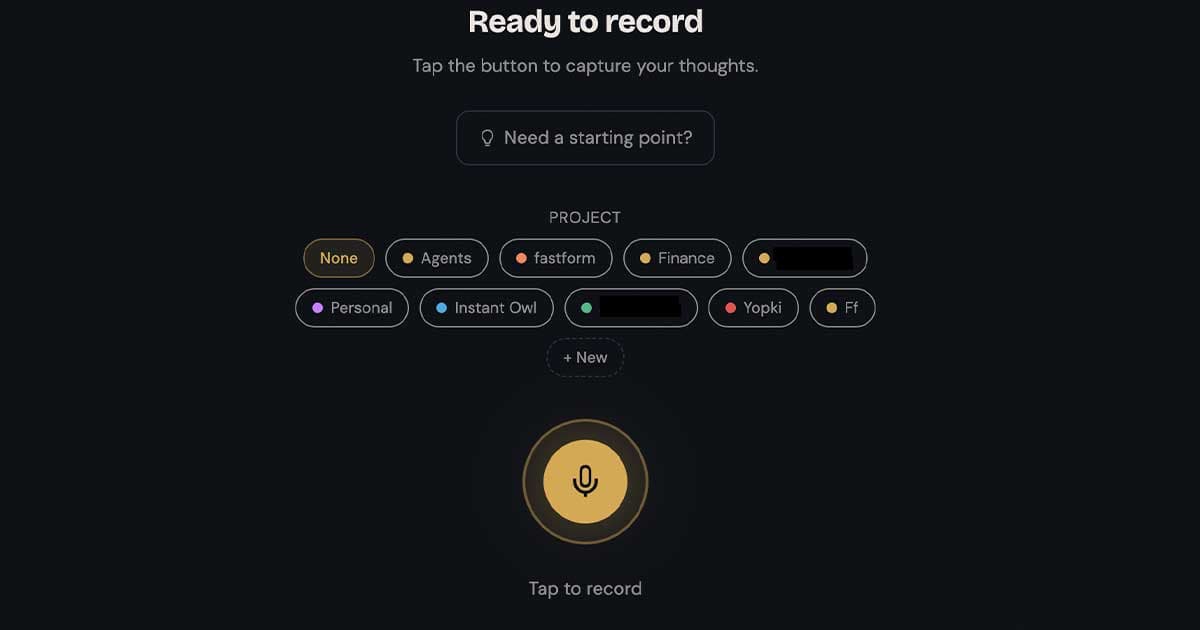
Talking instead of writing barely appears in the most widely read beginner guides to journaling, even though it solves the blank-page problem about as directly as anything on this page: it is easier to start talking about your day than writing about it. People who already journal this way describe it as talking out loud into a recording the way they would to a friend, using a commute, a walk, or the last few minutes before bed as the moment they talk instead of write. A voice journal works for the same reasons paper and apps do, just faster.
A spoken version of morning pages is a practical adaptation for mornings when three handwritten pages are not realistic. If you want the journal to respond back with follow-up questions or noticed patterns, an AI journal is built for that, with its own privacy tradeoffs worth reading first.
Full disclosure: InstantOwl is our product, and this blog belongs to it. If the blank page, or the time it takes to write, is what has stopped you from journaling, speaking an entry into InstantOwl and getting an organized entry back beats skipping the entry entirely, which is what happens to most journals left unattended too long. InstantOwl is currently free to use.
Related reading
- Journal prompts: original prompts organized by whether you have never started, gone stale, or are restarting after a lapse.
- Journal apps: an honest comparison of Apple Journal, Day One, Journey, and Diarium, plus the voice journaling gap.
- Voice journal: what it takes to keep an audio journal you will actually use, and what usually goes wrong.
- Morning pages: Julia Cameron's exact rules, why people quit, and when a spoken version makes sense.
Frequently asked questions
How do I start journaling as a beginner?
Start by describing your actual day in plain sentences, since journaling has only one real rule: you can journal however you want. Skip trying to write something profound at first. If the blank page is the problem, borrow a prompt or write a short letter to yourself instead of starting from nothing.
What should I write in my journal?
Write whatever is true for you right now, starting with your day before going deeper. A letter to yourself, a list of what you are waiting on, or an honest paragraph about how you actually feel all count. There is no required topic and no length you have to hit.
How often should I journal?
As often as you will actually keep doing it. Some people journal daily for a few minutes, others a few times a week for longer. Realistic timing beats an ideal schedule you abandon after two weeks. A short entry three days running beats one long entry you never repeat.
Is journaling good for mental health?
Wellness guides like Wondermind point to research linking journaling with lower stress and improved mood, and cite therapists who recommend it to clients. Journaling is not therapy and does not replace professional mental health care, but writing or talking through what is on your mind can be a genuinely useful habit alongside it.

Written by
Jim BreeseJim Breese is the founder of InstantOwl. He's spent 15 years building companies, from an Airbnb host community he founded and exited to growth leadership at venture-backed SaaS startups. He built InstantOwl because his best ideas kept arriving mid-walk, out of order, and half-finished.
Stop losing good ideas.
InstantOwl turns a rambling voice note into a clean, organized document in moments. Just talk. We'll organize it.
 Try InstantOwl free