Gratitude Journal: What to Write, What Works, and What the Research Actually Says
By Jim Breese ·
What is a gratitude journal, and does it actually work?
A gratitude journal is a regular written record of things you are grateful for, usually a short list with a sentence or two on why each one mattered. The honest answer to "does it work" leads with the actual research, not the marketing version of it that most search results for this topic settle for.
The foundational study is Emmons and McCullough's 2003 paper "Counting blessings versus burdens." Over about ten weeks, one group wrote weekly about things they were grateful for, one wrote about daily irritations, and one wrote about neutral events. Per Harvard Health Publishing's summary, the gratitude group reported more optimism and felt better about their lives than the irritations group, and in that study also reported exercising more and visiting the doctor less.
Greater Good in Action, the UC Berkeley Greater Good Science Center's practice library, points to a range of later replications across different countries and groups, from general adult samples to people managing chronic conditions, reporting similar links between routine gratitude expression and better self-reported health and happiness. Replication across different populations is a genuinely good sign for a psychology finding, but it is still the same kind of evidence: what people report about their own wellbeing, not a measured biological outcome.
Say the guardrail plainly: these are self-reported wellbeing gains from one landmark study plus a body of replications, not a clinical cure. A gratitude journal is not therapy and does not replace professional care, the same hedge we use in how to journal for journaling's mental health claims generally. Treat it as a habit with real, modest, well-documented upside, not a fix for a hard season on its own.
How do you start a gratitude journal?
Start with the protocol that was actually studied, not a guess: write up to five specific things you are grateful for, at least three times a week, for roughly 15 minutes a session. That is the exact structure GGIA's practice guide recommends, and it is worth following at least for the first two weeks before you adapt it to fit your own schedule.
Most ranking pages for this topic skip the exact protocol entirely and jump straight to a generic "write what you're grateful for daily" suggestion. Starting from the real structure below gives you something closer to what was actually tested, before you loosen it to whatever rhythm you can realistically keep.
- Pick at least three set days a week. GGIA's own tip is to write regularly, daily or every other day, and to commit to a regular time rather than journaling in bursts.
- Write or type up to five things, in a sentence or two each. A quick word ("job") counts less than a sentence about why it mattered.
- Keep each session to about 15 minutes, the duration the studied protocol prescribes. The depth of what you write matters more than the time on the page.
- Give it at least two weeks before judging whether it is working. GGIA's own research window ran that long at minimum.
Frequency is more flexible than most guides admit. GGIA's protocol sets three sessions a week as the floor, not a ceiling, and its own tips allow daily or every-other-day writing as long as it is regular. The bigger risk is staleness: writing about the same things the same way makes them start to feel routine, which is why the guide tells you to aim for variety and focus on different details each time. PositivePsychology.com offers a more flexible real-world version of the same idea: daily is fine if you want it, but "every other night" works too, and it is worth giving the habit about three weeks before deciding whether it is doing anything for you.
Writing versus typing is not a meaningful choice here. GGIA's own instructions say to "write down or type" your five things, so a notebook and a notes app both satisfy the protocol as studied. What matters is the content of the entry, specific and detailed rather than short and generic, not the tool it was made with, which is the same conclusion the rest of the journaling cluster keeps landing on.
What should you write in a gratitude journal so it doesn't go stale?
The failure mode is a repetitive list, the same three things every session until none of them mean anything anymore. The fix is not writing more, it is writing differently, and GGIA's research-backed tips lay out exactly how.
| Tip | What it means | Example |
|---|---|---|
| Be specific | Name the actual moment, not a category | "My coworkers brought me soup when I was sick on Tuesday," not "coworkers" |
| Depth over breadth | One detailed entry beats five one-word items | Explain why the soup mattered, not just that it happened |
| People over things | Gratitude toward people tends to carry more benefit than gratitude toward objects | A friend who called back beats a nice coffee |
| Mental subtraction | Imagine your life without the person or thing | What would this week look like without them in it |
| Frame good things as gifts | Treat them as given, not owed, so they do not get taken for granted | A gift you did not earn, not a thing you deserved |
| Savor surprises | Unexpected good things generate stronger gratitude than expected ones | An unplanned kindness, not your daily coffee |
| Add variety | Rotate subjects so entries do not habituate | Different people, moments, and details each session |
| Keep a regular schedule | Consistency compounds more than intensity | Same three days, not a burst then nothing |
That table is the section that separates a real gratitude-journaling guide from the retail listings and blank templates that currently dominate search results for this topic. Specificity and depth are the two levers that matter most: a detailed sentence about one coworker's soup run does more than a five-item list of vague nouns.
The tips stack. A strong entry usually combines two or three of them rather than applying just one: naming a specific person (people over things), explaining what your week would have looked like without them (mental subtraction), and noting that their help was unexpected (savoring surprise) turns one line into a genuinely useful entry instead of a shorthand list. That combination is also what keeps a journal from going stale, since the same person can generate a different entry every time depending on which detail you pull out.
Gratitude journal prompts
Use one of these per session instead of staring at a blank page, and rotate which type you reach for so the habit does not flatten into the same three answers every time. Each set below maps to one of the tips above, so working through different categories over a few weeks does the variety work for you automatically.
People prompts.
- Who did something small for you this week that you never thanked out loud?
- Which person in your life would this week have looked different without?
- Who taught you something you still use, and what was it?
Subtraction prompts.
- What would today have looked like without the one good thing that happened?
- What ordinary comfort would you actually miss if it disappeared tomorrow?
- What convenience do you use daily without ever noticing it?
Surprise prompts.
- What caught you off guard in a good way this week?
- What is something that went right today that you almost overlooked?
- When did a stranger do something small that stuck with you?
Hard-day prompts.
- On a rough day, what is the one thing that still went okay?
- What got you through today, even if it was small?
- What are you grateful you no longer have to deal with?
For a bigger library organized by mood and habit stage, not just gratitude, see our full set of original journal prompts, which also covers a set of gratitude prompts built to skip the cliches.
The one gratitude practice with the strongest evidence: the gratitude letter
The single strongest result in gratitude research is not a daily journal at all, it is a one-time letter. Psychologist Martin Seligman ran a study, described by Harvard Health Publishing, where participants wrote and personally delivered a thank-you letter to someone they had never properly thanked. That intervention produced the biggest happiness increase of everything tested, though the boost faded after about a month.
Treat the gratitude letter as a periodic companion to your regular journal, not a replacement for it. A daily or weekly practice builds a steady habit; an occasional letter, written and actually delivered, gives you a sharper, if temporary, spike on top of it. Pick someone specific, name what they did, and say why it mattered, the same specificity that makes a journal entry land.
The delivery matters as much as the writing. Seligman's study asked participants to personally deliver the letter, not mail it or leave it unsent, and that in-person moment is part of what made the effect so large. A letter drafted but never given is still a useful writing exercise, worth doing on a hard day when you need to sit with what someone means to you, but it is not the same intervention the research actually measured.
Paper, app, or out loud: keeping the habit
The habit dies at friction, the same problem as the rest of the journaling cluster, not at a lack of things to be grateful for. Paper, an app, or speaking your entries all work, and the honest answer is whichever one you will actually keep opening in week three.
A paper notebook is the simplest option and needs no setup, but it is easy to lose the thread if you skip a week and cannot find where you left off. Keeping entries in one of the best journal apps instead keeps them searchable and backed up, and several support prompts or reminders built in, which removes the "what do I write" hesitation on a tired night. Neither format is more legitimate than the other; the GGIA protocol itself allows either.
Speaking your entries out loud removes a different kind of friction: gratitude is easy to say and strangely awkward to write formally, especially when you are naming something about another person. Most people can talk through three or four specific, detailed things they are grateful for in a few minutes on a walk or before bed, without the extra step of composing full sentences on a page. The habit that survives is the one with the least resistance between having the thought and getting it down, on paper, in an app, or out loud.
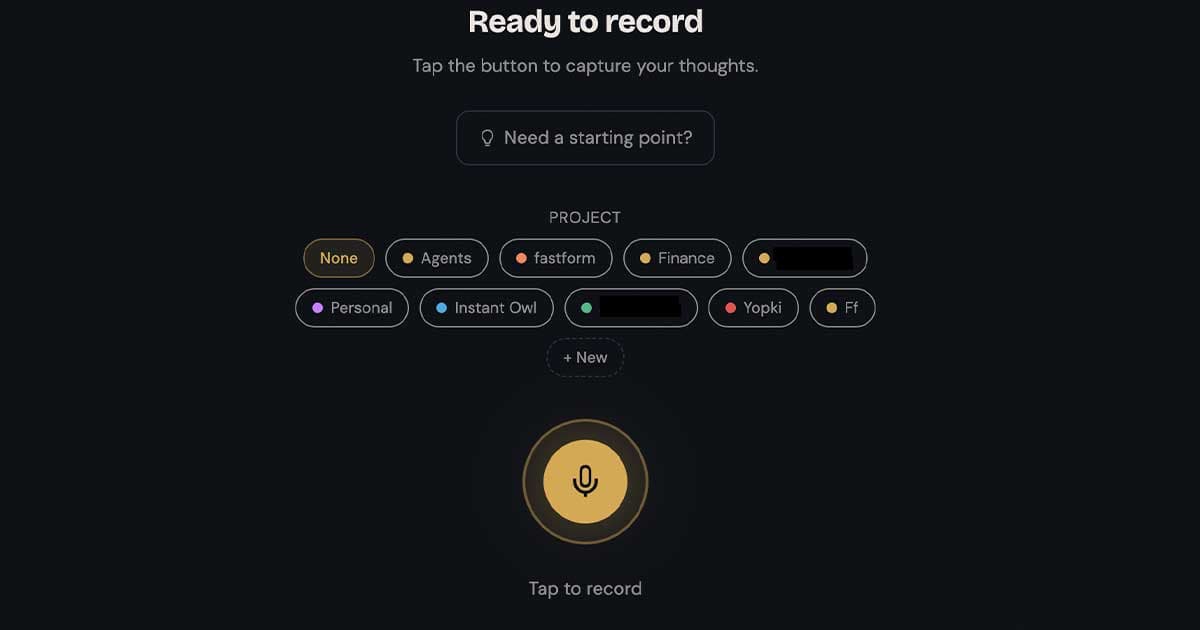
Full disclosure: InstantOwl is our product, and this blog belongs to it. If writing feels like the barrier, saying your gratitude entries out loud and letting InstantOwl organize them into a readable entry is a reasonable way to keep the habit going without adding a formal writing session to your day. InstantOwl is currently free to use.
Frequently asked questions
What do you write in a gratitude journal?
Write up to five specific things you're grateful for, favoring depth over a long list. Naming why something mattered, focusing on people over possessions, and noting things you would miss if they were gone all produce more benefit than a quick surface-level list.
How often should you write in a gratitude journal?
The most-studied protocol is about 15 minutes a session, at least three times a week, for at least two weeks. Daily writing is fine too; what matters more is a regular rhythm and enough variety that entries do not go stale, which is why the research-backed tips tell you to rotate what you write about. A flexible real-world version works: aim for a regular rhythm, even every other night, and give it about three weeks before judging whether it is doing anything.
Does a gratitude journal actually work?
The honest answer is hedged. In a landmark 2003 study, people who wrote weekly about things they were grateful for reported more optimism and better mood than a group who wrote about daily hassles, and in that study also reported exercising more and visiting the doctor less. These are self-reported wellbeing gains from one study plus later replications, not a clinical cure, and a gratitude journal does not replace therapy or medical care.
What is the 3-2-1 gratitude method?
The 3-2-1 method is a popular journaling template, not a studied research protocol: three things you're grateful for, two wins from the day, and one thing to improve. It's a reasonable lightweight structure if you like a fixed format, but it doesn't carry the same evidence base as the plain gratitude-journal protocol described above.

Written by
Jim BreeseJim Breese is the founder of InstantOwl. He's spent 15 years building companies, from an Airbnb host community he founded and exited to growth leadership at venture-backed SaaS startups. He built InstantOwl because his best ideas kept arriving mid-walk, out of order, and half-finished.
Stop losing good ideas.
InstantOwl turns a rambling voice note into a clean, organized document in moments. Just talk. We'll organize it.
 Try InstantOwl free