Morning Pages: The Rules, Why They Work, and When Longhand Fails
By Jim Breese · · Updated
What are morning pages?
Morning pages are three pages of longhand, stream of consciousness writing, done first thing in the morning. That is Julia Cameron's own definition, verbatim: "Morning Pages are three pages of longhand, stream of consciousness morning writing," per an official Julia Cameron Live Facebook post. She introduced the practice in her book The Artist's Way and still teaches it today.
On her own site, Cameron describes what the pages do: "These pages of longhand, stream-of-consciousness writing will provoke, clarify, comfort, cajole, prioritize, and synchronize the day at hand," according to the official page for her book The Miracle of Morning Pages on juliacameronlive.com. She calls morning pages her most powerful tool for unblocking creative stores.
Two rules matter as much as the format itself. Cameron's own FAQ page states them plainly: "Do not share your Morning Pages with the group or anyone else," and "Do not reread your Morning Pages until later in the course, if you are asked to do so by your facilitator or your own inner guidance." The pages are not a diary meant to be reread later, and they are not meant to be shown to anyone.
What are the rules for morning pages?
The rules are three pages, longhand, written first thing in the morning, stream of consciousness, kept private, and not reread early on. Each rule exists for a specific reason, not tradition for its own sake.
Three pages, and stop there. Oliver Burkeman, writing in The Guardian after adopting the practice, describes Cameron's method as strict on this point: exactly three US Letter sides, no more. Going past three risks what Cameron calls "self-involvement and narcissism," in Burkeman's account of her reasoning. He adds that "the second page-and-a-half comes harder, but often contains paydirt," meaning the useful material tends to show up only after the easy material runs out.
Longhand, not typed. Cameron's reasoning, as quoted in Chris Winfield's guide to the practice: "Velocity is the enemy. It takes longer to write by hand, and this slowness helps connect us to our emotional life." The slowness is the mechanism, not a side effect to engineer around.
First thing in the morning. Burkeman explains the logic this way: "You're trying to catch yourself before your ego's defences are in place," meaning the groggy, pre-caffeine version of you self-edits less than the version that has been awake for an hour. He also notes that grogginess itself may help: with the brain's inhibitory processes still weak on waking, that state is associated with more of the "Aha!" moments researchers link to creative insight. It is the same loosened, mind-wandering state that produces your best ideas in the shower.
Stream of consciousness, no editing. "There is no wrong way to do Morning Pages," Cameron says of the content specifically, per Burkeman's column. Winfield's guide echoes this: the pages are "not high art." Nobody is judging the sentences.
Private, and not reread right away. Cameron's own FAQ instructs writers not to share the pages with anyone and not to reread them until much later, if a facilitator asks them to. Burkeman frames the payoff of privacy this way: the pages are private, you can destroy them if you want, and "it's liberating to know you could." He cites Sarah Lewis's book The Rise on how many great creative people kept a private domain nobody else saw. That destroy-it-yourself privacy is exactly what you trade away the moment your journal lives on someone else's server, the tradeoff at the center of choosing an online journal.
Do morning pages really work?
Here is the honest answer: no ranking guide, article, or source in our research cites a controlled study of morning pages specifically. Every piece of evidence we found is personal testimony, some of it detailed and years long, none of it a clinical trial. Anyone claiming otherwise about this exact practice is not being straight with you.
That testimony is still worth taking seriously. Chris Winfield has written morning pages for 241 consecutive days at the time of his guide, missing only twice, and he reports higher anxiety specifically on the two days he skipped. Melissa Fleming, a UN communications chief, writes three handwritten pages every morning with a fountain pen before any contact with the outside world. She says the practice "neutralizes the inner censor" and surfaces subconscious patterns she would otherwise miss.
Burkeman, a self-described skeptic of the practice's new-age origins, reports feeling calmer, more resolved, and more insightful from the very first day he tried it: "calming anxieties, producing insights and resolving dilemmas," in his own words. He separately notes that externalizing thoughts through journaling in general has well-established psychological benefits, though that specific claim is about journaling broadly, not about morning pages as a method.
So the fair summary is this: strong, consistent testimony from real practitioners across years, and no controlled evidence tying the specific three-pages-longhand format to a measured outcome. Both things are true at once. Use the practice because people who have done it for years report real benefits, not because a study proved it.
Why do people quit morning pages?
People quit because the practice can feel like a chore, the blank page is intimidating before your brain wakes up, and three pages by hand costs real time every single day. This is the gap in every ranking guide in our research: none of them takes the objections seriously.
On r/Journaling, a poster three weeks into The Artist's Way put it bluntly: morning pages "just cause too much abhorrence... I just dont relish forcing myself to do it, feels very much chorish to me." Another commenter described the blank-page problem exactly: "I don't wake up with a head full of stuff, I wake up with a mind that takes a while to get going," leaving them staring at the page. A third agreed their brain is "hazy" on waking and resents feeling obligated to write regardless.
The time cost is real and consistent across sources. One Reddit commenter said three pages "takes me 30" minutes. Winfield's own guide states the same practice takes him 30 to 40 minutes most mornings. That is not a small daily tax, and it is the single biggest practical objection in our research.
Some people quit because the content itself feels pointless. One commenter described her own morning pages as "full of mindless boring drivel" and eventually switched to writing in the evening plus a looser, unnamed journal instead, concluding that "cultivating a morning practice that works for you is what it's really about." Reaching for our brain dump journal guide covers that release-first alternative in more depth.
Not everyone who struggles quits, though. The top comment in that same thread reframed the difficulty as the point: morning thoughts "feel too frantic or scary or fleeting," and morning pages exist to "unstuck" the brain before the day's real work starts. Another longtime practitioner burns her pages after writing them and says the ritual "reminds me every day that I can do hard things." The friction is real for both camps. The difference is whether someone decides it's worth pushing through.
Can you type your morning pages?
No, not according to Cameron's own rule. The canon is longhand, and typing is a deviation from it. Every live source we checked agrees on this point without exception.
Burkeman's account of the method treats longhand as non-negotiable: three exact pages, by hand, first thing in the morning. The reasoning traces back to the "velocity is the enemy" idea. Typing is fast, and fast defeats the slowness Cameron says connects you to your emotional life. Type the same three pages and you finish quicker, but you also skip the mechanism she says makes the practice work.
Gabriela Pereira, who writes the DIY MFA site, is the most honest example of someone who deviates from the canon on purpose. She drops the first-thing-in-the-morning rule ("If I happen to drag myself awake at an early hour... I am crankypants for the rest of the day," so coffee comes first). She writes a variable length: some days "five or even six pages," other days "half a page at most." A missed day is not a failure, since a strict daily streak is exactly what made her "fall off the train" before.
Her solution is to stop calling it Morning Pages at all: "I don't call them Morning Pages. I call it journaling." She frames the whole practice as "brain-warming," like kneading clay before you actually start creating something, and says plainly, "We believe in doing what gets results." If Cameron's strict rules are exactly what keep bouncing you off, ordinary journaling has just one real rule and a much lower bar for what counts as an entry.
Pereira's pattern is the honest one to copy if you deviate: change the method, stop claiming the brand name. If you type, or use a speech-to-text tool to speak the words instead of writing them longhand, call it journaling, not morning pages. That is not a knock on typing. It just respects what Cameron actually built.
Can you speak your morning pages?
Cameron does not endorse this, and we want to be clear about that before anything else. No source in our research shows her recommending or approving a spoken or voice-recorded version of morning pages. What follows is our own adaptation, offered honestly as an adaptation, not as her method.
The idea is simple. If the realistic choice for someone is a spoken version of the practice or no practice at all, a spoken version that keeps the rules that actually transfer is better than nothing. Several of Cameron's rules survive the switch from pen to voice just fine: stream of consciousness (talk without planning what you will say), morning timing (do it before the day's first real obligation, for the same ego-defense reasons Burkeman describes), privacy by default (nobody hears it but you), and a fixed volume, the way three pages is a fixed volume on paper.
A reasonable fixed volume for talking is five to ten minutes, long enough to get past the easy material and reach the harder, more useful part, the same "paydirt" Burkeman describes showing up after the first page and a half. This is the same fast-capture instinct behind a brain dump, pointed at reflection instead of pure release.
One more rule transfers directly: do not relisten right away. Cameron's instruction not to reread pages early maps cleanly onto not replaying the recording the same day. The point in both formats is the same: get it out, do not immediately judge it. Our fuller guide to voice journaling covers this kind of spoken reflective practice in more depth.
Be honest about what a spoken version loses, too. Cameron's central argument for longhand is that slowness is what connects you to your emotional life, and speaking is fast. That is the whole trade. You also lose some of the identity benefit of doing the hard, slower thing on purpose: a longtime practitioner in our research called that exact feeling "I can do hard things" after years of handwriting pages she never rereads.
A spoken version does not give you that same discipline. What it gives you instead is a version of the practice that people who would otherwise do nothing at all can actually sustain.
Where InstantOwl fits
Full disclosure first: InstantOwl is our product, and this is our blog. A spoken morning-pages practice solves the writing problem, but it creates a new one: a five- or ten-minute ramble has to go somewhere, or it just becomes another buried voice note you never open again.
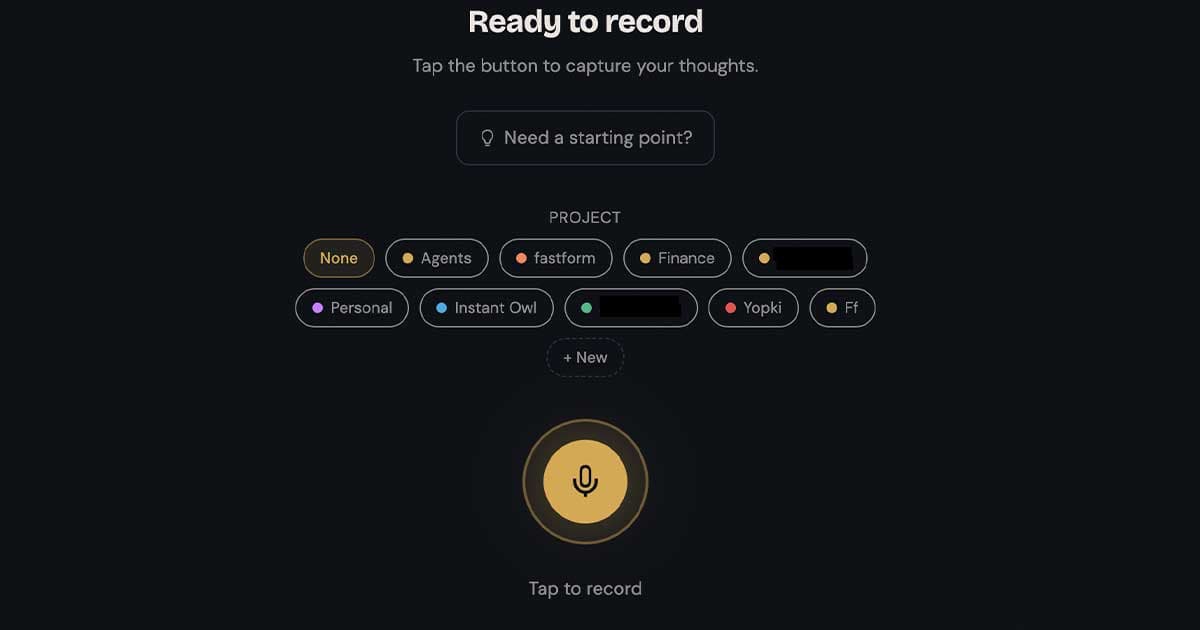
InstantOwl exists for exactly that gap. Talk through your morning pages the way you would talk to yourself on paper, unfiltered and unplanned, and InstantOwl turns the recording into an organized entry instead of a wall of transcript text. You get the release of talking it out without a pile of audio files to manage afterward.
This is not a replacement for Cameron's method, and we are not pretending it is. If longhand works for you, keep doing it exactly as she describes it. InstantOwl is here for the mornings when a pen and three blank pages are not realistic, and the alternative was skipping the practice altogether. InstantOwl is currently free to use.
Related reading
- Voice journaling: a fuller guide to talking through a reflective practice instead of writing one.
- What is a brain dump journal: the release-first alternative when morning pages feel like too much structure.
- What is a brain dump: why speaking is the fastest way to get a thought out of your head.
Frequently asked questions
What does it mean to do morning pages?
Doing morning pages means writing three full pages by hand, first thing in the morning, in a stream of consciousness style with no editing, and keeping the pages private without rereading them right away, following Julia Cameron's original rules from The Artist's Way.
How are morning pages different from journaling?
Morning pages follow one fixed format every day: three handwritten pages, first thing in the morning, no editing, no rereading. Journaling can be any length, any time of day, and revisited later. Morning pages are a strict daily ritual; journaling is a flexible habit.
How long do morning pages take?
Most practitioners report 30 to 40 minutes, according to both a widely read practitioner guide and multiple Reddit users who tried the practice. That time cost, not the writing itself, is the most common reason people quit.
Can you do morning pages on a computer?
Not according to Julia Cameron's own rule, which requires longhand because the slowness of handwriting is part of how the practice works. Typing the same three pages on a computer is a deviation from her method, not a variation of it.
When should you do morning pages?
First thing in the morning, before checking your phone, talking to anyone, or starting the day's first task, so you write before what Cameron calls your ego's defenses are in place.
Written by
Jim BreeseJim Breese is the founder of InstantOwl. He's spent 15 years building companies, from an Airbnb host community he founded and exited to growth leadership at venture-backed SaaS startups. He built InstantOwl because his best ideas kept arriving mid-walk, out of order, and half-finished.
Stop losing good ideas.
InstantOwl turns a rambling voice note into a clean, organized document in moments. Just talk. We'll organize it.
 Try InstantOwl free