Task Management: What Every Definition Misses (and the Two-Worlds Problem)
By Jim Breese · · Updated
What is task management?
Coursera, the educational authority ranking for this term, defines task management as "the process of effectively and efficiently tracking, managing, and executing the lifecycle of a task or many tasks within a project, from inception to execution." Asana's own definition lands in nearly the same place: "the process of organizing, prioritizing, and tracking tasks to make sure they're completed efficiently and on time." The top-ranking tools listicle for the term uses almost the same three verbs again: task management software "helps individuals and teams organize, prioritize, and track tasks throughout a project's lifecycle."
All three definitions start at the same point: a task that already exists somewhere, ready to be organized, prioritized, or tracked. None of them touches what happens before that moment, when a task exists only in your head, said once out loud or scribbled on the back of a receipt, not yet inside any system at all. That gap, not the tracking everyone already agrees on, is where most tasks actually die.
Even the tools listicle concedes the point, just not on purpose. Its own 2026 trends section names "Voice Command and Chat-Based Task Creation" as an emerging trend, explaining that it "makes it easier to capture ideas on-the-go, create tasks during meetings, or quickly update progress without navigating menus." An affiliate software roundup, built to rank team project-management tools, is telling you the category's real edge is capture, not another dashboard view.
Why does searching "task management" send you to enterprise software?
Search "task management" and the top-ranking tools roundup for the term hands you ten picks, and every single one is per-user team project-management software priced from $4 to $35 a user per month. Personal task managers, the tools most individual searchers actually want, do not appear anywhere in its top ten. That listicle discloses its own bias plainly: "We review tools independently, and commissions help fund our testing." Every one of its ten picks sells to teams, not individuals.
The specific picks make the pattern concrete. monday's AI Work Platform starts at $9 a user monthly, Zoho Projects at $4, ClickUp at $7, and Quickbase at $35, all per that listicle's own pricing table. Its own "how to choose" checklist for picking one, scalability, integrations, customizability, budget, security safeguards, is a checklist built for someone buying software for a department, not someone drowning in their own to-do list.
If you searched "task management" because you personally have too many things to keep track of, you were routed to software built to assign work across a company, not to help one person remember their own day. The listicle is not wrong about what it recommends. It is just answering a different question than the one most searchers are actually asking.
The fix is a two-second triage before you read another comparison. If you need to assign tasks to other people, track deadlines across a team, and report progress upward, an enterprise platform earns its per-user price. If you are managing your own day, your own projects, and your own head, a personal task manager does the same job for a fraction of the cost, and the rest of this page is written for that second reader.
What task management methods are actually backed by a real source?
Coursera's guide, the only source here that names techniques rather than software, lists five worth knowing. Time-blocking is "the practice of blocking off chunks or sections of your day to devote to a specific task." To-do lists mean simple daily tracking, on paper, in phone notes, or in an app. Flexible scheduling means keeping open time in the day on purpose, to absorb the unexpected without stress. Goal alignment ties short-term tasks back to a longer-term goal you can measure progress against. Kanban, in its low-tech original form, moves sticky notes across columns: in progress, in review, completed.
What is deliberately missing from that list is a standalone explainer of Getting Things Done or the Eisenhower Matrix. Neither one is covered by Coursera, Asana, or the tools listicle, so this page will not invent authority those three sources do not have. Both do show up elsewhere in real tools: TickTick lists an Eisenhower matrix among its features, as advertised on its own features page, and the two-minute rule from Getting Things Done shows up constantly in ADHD productivity advice, sometimes confused with a completely different rule that shares its name.
If that name collision, or the deeper mechanics of either method, is what brought you here, our ADHD productivity guide untangles the two competing "two-minute rules" in detail and traces where each one actually comes from. This page's job stays narrower: name only the methods the sources in front of us actually back, and be honest about which ones we are not qualified to explain from scratch.
Which personal task app should you actually use?
If you are managing your own tasks rather than a team's, Todoist and TickTick are the two personal apps worth comparing, and both now ship their own AI voice capture on top of the classic list. Todoist's free Beginner plan caps you at 5 personal projects; Pro runs from $5 a month billed yearly. TickTick's free plan is real too, and Premium runs $35.99 a year, roughly half what Todoist Pro costs.
Neither app appears anywhere in the enterprise listicle's top ten, which tells you more about who that listicle was written for than it does about either app's quality.
Price and feature counts do not settle which one actually fits you, and our verified comparison of Todoist and TickTick covers the real tradeoffs: TickTick's built-in calendar and Pomodoro timer against Todoist's faster natural-language dates and cleaner interface.
Both companies have also added an AI layer on top of their classic lists, and it is worth knowing what that layer actually does before you pay for it. Our breakdown of AI to-do apps splits the category into three real jobs: schedulers that auto-plan a calendar, coaches bolted onto a task you already wrote down, and voice capture that turns a spoken ramble into structured tasks. Knowing which job you actually need saves you from paying for the wrong one.
If the real bottleneck is not which app to pick but keeping any task in your head long enough to write it down at all, our roundup of ADHD apps covers tools built specifically for that mechanism, not just a longer feature list.
None of this means the enterprise side is wrong to exist. A manager assigning work across ten people genuinely needs dependencies, shared timelines, and roles and permissions, features a personal task manager was never built to carry. Much of that assigned work also gets negotiated in recurring one-on-one meetings, a format with enough structure of its own that we cover it separately. The mistake is only in assuming the same tool has to answer both jobs. Most searchers typing "task management" into Google are the second reader, not the first, and the top result rarely remembers that.
The capture gap: why tasks die before they reach any list
A task management app can organize, prioritize, and track a task the moment it exists inside the app. It cannot do anything about the ten seconds before that, when the task existed only as a thought in your head and you were driving, mid-conversation, or too deep in something else to stop and type it in. That is as true for a consultant capturing follow-ups between client meetings as it is for anyone else. That gap is where most tasks actually die, quietly, before anyone ever sees them on a list.
The top tools listicle for "task management" names this exact gap as an emerging trend, without meaning to make our point: voice and chat-based task creation "makes it easier to capture ideas on-the-go, create tasks during meetings, or quickly update progress without navigating menus." An affiliate roundup built to sell team software is describing the same problem this page has been circling since the first definition at the top.
The same listicle's own "10 key features" checklist for choosing task software underlines the gap again: task creation and assignment, deadline tracking, prioritization, collaboration, progress tracking, notifications, integrations, reporting, mobile access, and customizable workflows. Creation is on that list. The friction of getting a task out of your head and into that creation step, the part that actually determines whether the task gets written down at all, never is.
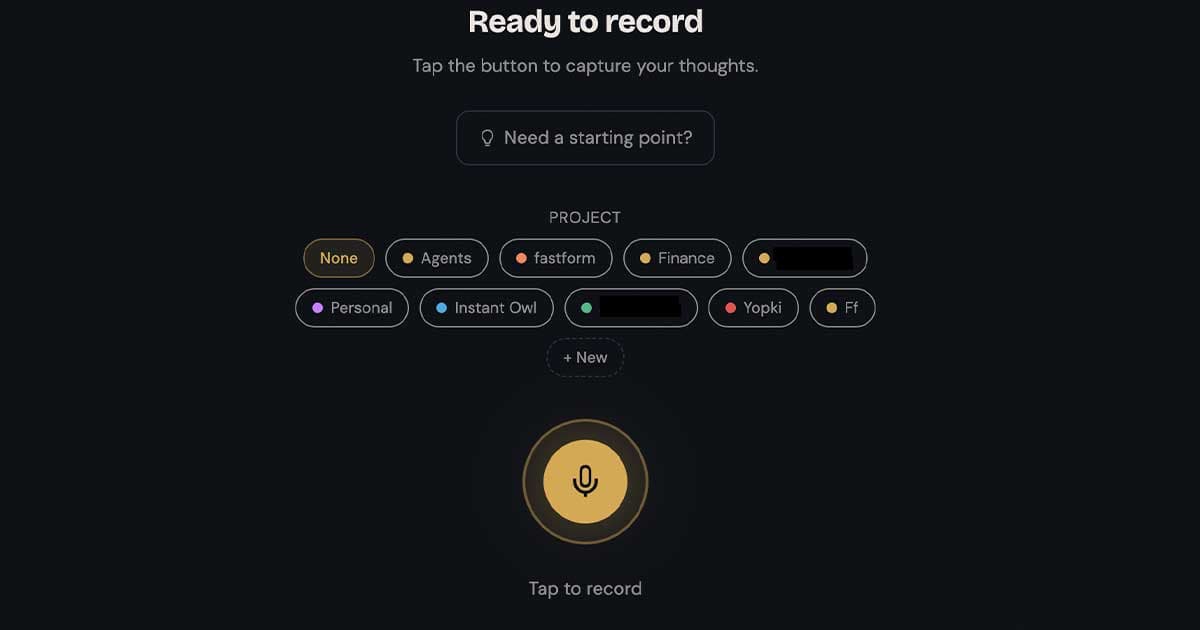
Our full comparison of voice to-do options covers every real way to build a task list by talking, from Siri and Google Assistant to Todoist's own Ramble feature. Full disclosure: InstantOwl is our product, and this blog belongs to it. InstantOwl's lane is the messiest version of that same idea: speak a whole tangled ramble the way it actually comes out of your head, several tasks mixed together and out of order, and get back a structured task list instead of a wall of transcript to sort through yourself.
What a brain dump actually is covers why speaking beats typing for getting a thought out fast, before you have decided which app, if any, should hold the task that comes out of it. InstantOwl is currently free to use. It does not replace Todoist, TickTick, or a team platform like the ones the top search result recommends, and it is not trying to. It solves the step before all of them: getting the task said, and turned into something usable, before it disappears.
Related reading
- What is a brain dump: why speaking beats typing for getting a thought out of your head fast.
- Voice to-do lists compared: every real way to build a task list by talking, including Siri, Google Assistant, and Todoist's Ramble.
- Todoist vs TickTick: verified prices and real tradeoffs if a personal task manager is the tool you actually need.
- ADHD apps that people actually keep using: honest picks for capture and tasks when memory, not organization, is the real constraint.
Frequently asked questions
What are task management skills?
Per Coursera's guide, the core task management skills are critical thinking, troubleshooting ability, attention to detail, effective communication, task delegation, organization, and familiarity with systems and tools. These apply whether you are managing a team's workload or just your own day.
What is the best task management method?
There is no single best method, only fit. Coursera's sourced list covers time-blocking, plain to-do lists, flexible scheduling, goal alignment, and low-tech Kanban. Pick based on what actually derails you: time-blocking for a day that fills with other people's requests, Kanban for work that moves through visible stages, a plain to-do list if you just need one place to look.
What is the best task management app?
It depends which world you live in. If you manage a team's work, deadlines, and reporting, an enterprise platform priced per user earns its cost. If you manage only your own tasks, a personal app like Todoist or TickTick does the same job for a fraction of the price, and neither one requires assigning work to anyone else.
How do I keep track of tasks I think of on the go?
Speak it the moment it occurs instead of waiting to type it in later, since that gap is where most on-the-go tasks disappear. Siri and Google Assistant handle one task at a time. InstantOwl handles a whole rambling list at once, turning a messy spoken thought into structured tasks, and it is currently free to use.

Written by
Jim BreeseJim Breese is the founder of InstantOwl. He's spent 15 years building companies, from an Airbnb host community he founded and exited to growth leadership at venture-backed SaaS startups. He built InstantOwl because his best ideas kept arriving mid-walk, out of order, and half-finished.
Stop losing good ideas.
InstantOwl turns a rambling voice note into a clean, organized document in moments. Just talk. We'll organize it.
 Try InstantOwl free