How to Transcribe a Teams Recording (Including After the Meeting)
By Jim Breese · · Updated

Can you transcribe a Teams recording after the meeting already happened?
Yes. If your Teams recording has no transcript, the fix most guides skip is Microsoft Stream, not a third-party upload tool. Every Teams recording lives on SharePoint inside Microsoft Stream, and Stream has its own Generate button that builds a transcript from the video file itself, whether or not live transcription was running during the call.
Here's the path: open the recording where it's stored (OneDrive or SharePoint, or through the meeting's Recap tab), find the Video settings menu, and select Generate. Per Microsoft's own support article: "Transcript and closed caption generation are only supported for videos less than 4GB in size and less than 4 hours." Generation covers 28 languages, fewer than the 50-plus languages live transcription supports, but more than enough for most recordings.
There's no license requirement printed on the page. It's described as enabled by default for work accounts, but tenant admins can still restrict it. So the honest version is: open the recording in Stream, and if your organization allows it, you'll see Generate under Video settings. If you don't see it, that's an admin setting, not something broken on your end.
Once it finishes, the transcript downloads as a WebVTT file and inherits the same permissions as the video itself, so anyone who could already watch the recording can also read the transcript. On a Reddit thread where someone asked exactly this question, recording finished but no transcript in sight, another user pointed straight to this Stream feature, and the original poster confirmed it worked within minutes.
This matters because most competing guides only cover live transcription, the setting you have to remember to turn on before the meeting starts. Stream's Generate button is the fix for everyone who didn't.
How does live transcription actually work during a Teams meeting?
During the meeting, go to More actions, select Record and transcribe, then Start transcription, and confirm the language everyone is speaking. On mobile, tap More options, tap Transcription, and confirm; this works the same as desktop, so a guide claiming transcription is desktop only is out of date. Per Microsoft's guide: "When you record a meeting, transcription starts automatically." Transcription can also run by itself, without a recording.
This is where most people get stuck. Recording and transcription are two separate settings, not one. Per Microsoft's admin documentation: "If recording is turned on, but transcription is turned off, the recording doesn't have a transcript file stored next to it." That's the exact situation behind most "why is my Teams recording missing a transcript" searches: recording was on, transcription quietly wasn't.
The gating goes deeper than a single toggle. The same page states transcription is "both a per-organizer and per-user policy setting. For meetings and events to include transcripts, the organizer must have this setting turned on. The user who starts the recording or transcript must also have this setting turned on." Miss either half and nothing gets recorded as text, even if the button looked available. Worth knowing too: when an organizer turns off Microsoft 365 Copilot for meetings, recording and transcription both turn off with it.
Once transcription is on and the meeting ends, per Microsoft, "the transcript is immediately available in the meeting event on the calendar," reachable through Chat, the past meeting, then Recap, then Transcript. By default, only the organizer and co-organizers can download it, as a .docx or .vtt file. Everyone else has to ask, or wait for it to be shared.
Where do Teams recordings and transcripts actually live?
Teams recordings and transcripts are stored in OneDrive for work or school and in SharePoint, not inside the Teams app itself. Per Microsoft's support article, private meetings and group calls save to the organizer's OneDrive, and channel meetings can route to SharePoint depending on admin configuration. Only organizers, co-organizers, and presenters can start a recording; guests and external participants cannot.
Recording itself requires a business license, which is why free or personal Teams accounts never see this feature. Per the same article, the license list is "Office 365 Enterprise E1, E3, E5, F3, A1, A3, A5, M365 Business, Business Premium, or Business Essentials." If your org is on Teams for work, you almost certainly qualify; a friend-and-family Teams account does not.
That storage location explains a common complaint. A person other than the organizer often can't open a recording without asking for it, since it lives in one specific person's OneDrive by default and has to be shared manually before a teammate can see it. It's not a bug, just where the file actually saves.
There's a sharper trap worth knowing before you move or copy anything. Per the same admin documentation cited above: "The transcription link... can be broken if the video file is copied within the same OneDrive or SharePoint site. This action would result in captions not displaying on the copied video file." Multiple Teams users on Reddit have hit this exact problem: moving or copying a recording strips the transcript link away, leaving the video with no captions and no easy way to reattach them.
The safest habit is to leave a recording where it landed and generate or download the transcript from there, rather than moving the file first and troubleshooting a missing transcript second.
What if Stream's Generate button is blocked, or the file already left SharePoint?
Upload the file to a transcription tool that accepts .mp4. This is the fallback for a downloaded recording, a personal (non-business) Teams account, or a tenant where Stream's Generate is turned off by policy. If you already pay for Microsoft 365 through work or school, the tool you already own is the first one to try.
Word's Transcribe feature accepts .wav, .mp4, .m4a, and .mp3 files directly. Per Microsoft's support article, it gives you a "maximum of 300 minutes of uploaded audio per month," or 30,000 minutes a month with a Copilot license, separates speakers automatically, and adds clickable timestamps. It runs in Word for the web, in the new Microsoft Edge or Chrome. A downloaded Teams recording is already an .mp4, so it drops straight in with no conversion step. Since Teams itself requires a Microsoft 365 business license, most people stuck on this problem already have Word Transcribe available and just haven't noticed.
To find it: open Word for the web, go to Home, select Dictate, select Transcribe, then Upload audio, and pick the file. It supports over 80 locales, well past the 28 languages Stream's Generate covers, so it's also the better pick for a recording in a language Stream doesn't support.
TurboScribe is the option for volume: several long recordings, not just one. Its free tier gives 3 transcripts a day at 30 minutes each, no card required. Its Unlimited plan is $10 a month billed yearly, or $20 billed monthly, for files up to 10 hours or 5GB, and it accepts video formats natively. Our full guide to transcribing audio to text covers more options if neither of these fits your file size or budget.
Is it OK to transcribe someone else's Teams meeting?
Check your organization's policy first; this isn't legal advice. Teams is consent-by-design for its own native features: per Microsoft's documentation, "All participants see a notification that the meeting is being transcribed," and "Participants can choose to hide their identities in meeting captions and transcripts." Everyone in the meeting already knows transcription is happening, and has a way to opt out of being identified in the result.
Where policy questions actually come up is the upload step, not the meeting itself. Uploading a colleague's recorded meeting to a third-party tool like Word Transcribe or TurboScribe moves that audio outside Microsoft's own environment. Some organizations require every participant to be told, and to agree, before a recording is handled by an outside tool, for legal, contractual, or security reasons. That's a quick check worth doing before you upload a file, not after someone asks why an external tool has a copy of the meeting.
Where does InstantOwl fit into this?
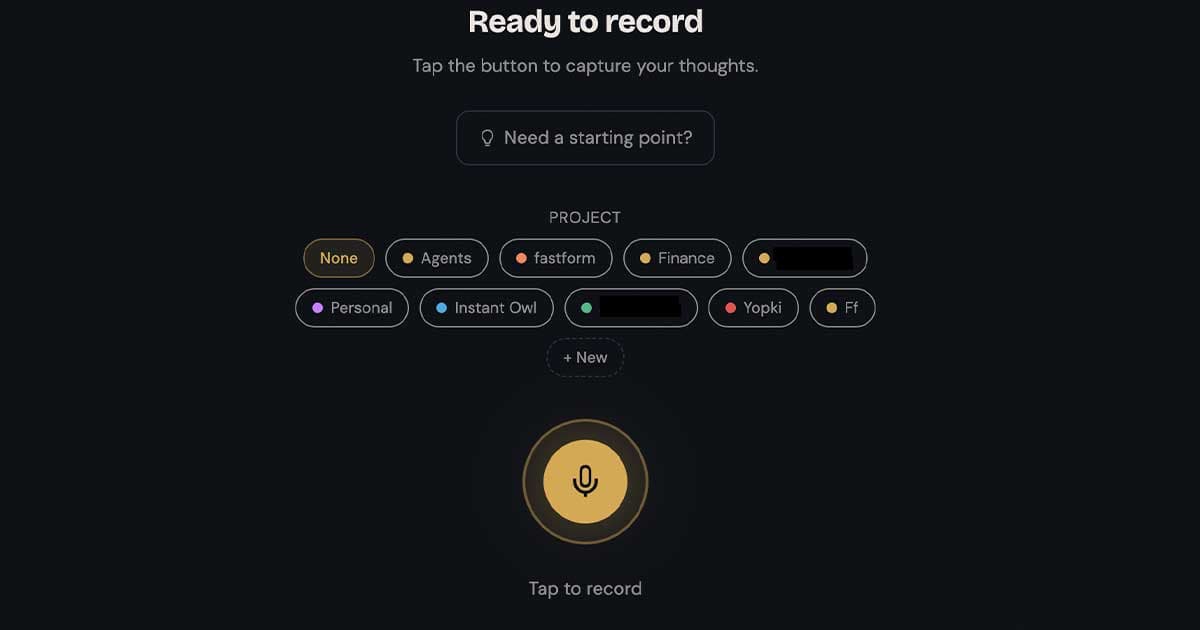
Full disclosure first: InstantOwl is our product, and this blog belongs to it. It isn't built to transcribe an hour of someone else's meeting; Stream, Word Transcribe, and TurboScribe already handle that job well, as covered above. It's built for the two minutes right after the call ends, when you talk through what you actually took away: what got decided, what you now owe someone, what's due Thursday, in your own words before you move to the next thing.
That recording is only your voice, so there's no consent question to check first, and no transcript-versus-recap distinction to untangle. InstantOwl accepts audio and video uploads including .mp4 and .m4a files up to 150MB, so it also works for a shorter Teams clip if that's what you're holding. For the after-call debrief pattern in more depth, our meeting notes guide covers the template and habits that work when a bot isn't the right call. InstantOwl is currently free to use.
Related reading
- How to transcribe a Zoom recording: the same after-the-fact problem on a different platform, and why Zoom has no equivalent to Stream's Generate button.
- How to take meeting notes: the template and cleanup habits that work when you'd rather write your own summary than clean up a transcript.
- How to transcribe audio to text: every upload-based option, with exact prices and file limits, if Word Transcribe and TurboScribe don't fit your recording.
Frequently asked questions
Can you transcribe a Teams meeting after it was recorded?
Yes. Open the recording in Microsoft Stream on SharePoint, go to Video settings, and select Generate. This works on the video file itself, so it does not depend on whether live transcription was running during the meeting, as long as the file is under 4GB and under 4 hours and your organization's tenant allows it.
Why is there no transcript with my Teams recording?
Because recording and transcription are two separate settings in Teams. Per Microsoft's own admin documentation, if recording is turned on but transcription is turned off, the recording does not have a transcript file stored next to it. Recording alone never produces a transcript on its own.
Is Microsoft Teams transcription free?
It is included with a Microsoft 365 Enterprise, Business, or Education license that has recording and transcription enabled by an admin. There is no separate transcription fee, but free or personal Teams accounts without one of those business licenses do not get the feature at all.
Can I start transcription from my phone?
Yes. On the Teams mobile app, tap More options during a meeting, tap Transcription, and confirm. This works the same way as the desktop steps; any guide claiming transcription is desktop only is describing an older version of Teams.

Written by
Jim BreeseJim Breese is the founder of InstantOwl. He's spent 15 years building companies, from an Airbnb host community he founded and exited to growth leadership at venture-backed SaaS startups. He built InstantOwl because his best ideas kept arriving mid-walk, out of order, and half-finished.
Stop losing good ideas.
InstantOwl turns a rambling voice note into a clean, organized document in moments. Just talk. We'll organize it.
 Try InstantOwl free