How to Transcribe a Zoom Recording (Even Ones You Already Made)
By Jim Breese · · Updated

Does Zoom automatically transcribe your recordings?
Yes, but only under three conditions at once. Per Zoom's support article, you need a paid Pro, Business, Education, or Enterprise account, cloud recording turned on for that meeting, and the audio transcript setting enabled. Miss any one of the three and no transcript gets made, no matter how the meeting itself went.
The setting itself lives in your account's recording preferences, under the cloud recording options, as a toggle for creating an audio transcript. Turn it on before you record, not after. Zoom's own article covers exactly where to find it, and notes that if you meet the requirements but still don't see the option, you'll need to contact Zoom Support directly to have it enabled.
Once it's on, Zoom sends two separate emails: one when the cloud recording itself is ready, a second, sometimes noticeably later, when the transcript has finished processing. The transcript then shows up in the web portal under Recordings & Transcripts, saved in VTT format alongside the recording. That's a timestamped caption file, readable in any text editor, not a clean paragraph-by-paragraph document. Expect to do some cleanup before you hand it to anyone else.
Zoom supports 19 languages for this feature: English, Spanish, French, German, Italian, Chinese (Simplified), Russian, Ukrainian, Japanese, Korean, Vietnamese, Dutch, Portuguese, Arabic, Polish, Romanian, Swedish, Turkish, and Danish. You can also search the transcript text directly from the Cloud Recordings tab, filtering by date range, host, or storage location, and edit any phrase in place by hovering it and clicking the pencil icon.
A VTT file doesn't read like a document. Instead of paragraphs, you get short numbered blocks: a timestamp range like 00:00:12.500 --> 00:00:15.200, followed by the words spoken in that window, repeated end to end for the whole recording. It's exactly what a video player uses for captions, which is the point, but it means someone still has to turn it into a document before it's useful to anyone who wasn't in the meeting.
Why can't Zoom transcribe a recording you already made?
Because Zoom's transcription only runs at the moment a cloud recording is created, not afterward. If the audio transcript setting was off when you recorded, or the recording was saved locally instead of to the cloud, there's no way to go back and add captions to it inside Zoom. This is the gap most people searching this topic are actually stuck in: the meeting already happened, and now they need the words on paper.
A widely read Zoom user forum thread on exactly this problem confirms it plainly: if a cloud recording doesn't already have transcription, downloading the file, editing it elsewhere, and uploading it back is the only path, because Zoom itself won't retroactively add captions to a finished recording. One user in that same thread summed up the frustration simply: they hadn't realized the setting needed to be on before the meeting, and now the only option left was typing it all out by hand, or finding another tool to do it.
The lesson repeated across multiple Zoom discussions is the same one: set the audio transcript option before the meeting, not after. If you're reading this because you already recorded something without it on, the next section is your recipe.
This trips up the same handful of situations every time: a host who upgraded from a free plan recently and assumed transcription came with it automatically, someone handed a recording after the fact who never touched the original settings, or a recurring meeting where the setting was on for months and then quietly got switched off during an account change. In every case, the recording itself is fine. It's the transcript that's missing.
How do you transcribe a Zoom recording you already have?
Download the recording first, then upload it somewhere that can process audio on its own. If you recorded locally rather than to the cloud, Zoom actually saves two files for you: an .mp4 video and a separate, much smaller .m4a audio file. Upload the .m4a instead of the full video wherever a tool accepts it. It's the same words, a fraction of the file size, and a faster upload.
Where you upload it depends on what you already have and how much you're transcribing:
- If you already pay for Microsoft 365, use Word's built-in Transcribe feature. It accepts .wav, .mp4, .m4a, and .mp3 files directly, gives you 300 minutes of uploaded audio a month, separates speakers automatically, and runs in Word for the web in Edge or Chrome, per Microsoft's support article. It's also the tool most often recommended by other Zoom users who've hit this exact problem, since most people already have it through work or school.
- If you have several recordings, or long ones, TurboScribe is the volume option. Its free tier gives you 3 transcripts a day, 30 minutes each, no card required. Its Unlimited plan is $10 a month billed yearly (or $20 billed monthly) for files up to 10 hours or 5 GB, and it accepts video formats natively, so you can skip extracting the audio at all if you'd rather not.
- If the recording needs to be as accurate as possible, HappyScribe offers a human transcription tier alongside its AI option. The first 10 minutes of AI transcription are free, one time. Beyond that, its human transcribers deliver accuracy close to 99% in a matter of hours to 24 hours, which matters for anything you'll quote directly or hand to someone else.
Whichever tool you choose, treat the output the same way you'd treat Zoom's own VTT file: a working draft, not a finished document. Even a close-to-perfect transcript still reads like a transcript, full stops and all, until someone edits it into something a reader can actually use.
How do you make sure this doesn't happen again?
Turn on the audio transcript setting before your next recording starts, not during or after it. That single step is what separates a transcript waiting in your inbox from another recording you'll have to upload somewhere else after the fact. Multiple Zoom users, after getting caught by this exact gap, described the same regret: they assumed the setting applied automatically, and only found out otherwise once the meeting was already over.
Also expect the two-email pattern once it's on correctly: Zoom notifies you when the cloud recording is ready first, then sends a second email once the transcript itself has finished processing, which can take noticeably longer. If the first email arrives without a transcript attached, that's normal. It isn't a sign anything failed.
Is there a way to skip the transcript-then-cleanup step entirely?
Yes, if what you actually want every week is meeting notes rather than a one-off transcript. A notetaker bot joins the call live, transcribes it in real time, and produces a summary with action items, without you having to download or upload anything afterward. Otter.ai is the best known option for this, and our Otter vs Fathom comparison breaks down which of the two fits a solo user versus a small team.
Fireflies.ai is another common choice, particularly for teams who want unlimited free transcription with a storage cap instead of a minutes cap. All three work the same way in principle: the bot does the sitting-through-the-meeting part, so you never touch a VTT file at all.
Before you add any bot to a recurring call, check your company's policy first. Some organizations require every participant to be told, and to agree, before a meeting is recorded or transcribed by a third-party tool, for legal, contractual, or security reasons. That's a five-second check that's worth doing before the bot joins, not after someone asks why it's there.
Where does InstantOwl fit into this?
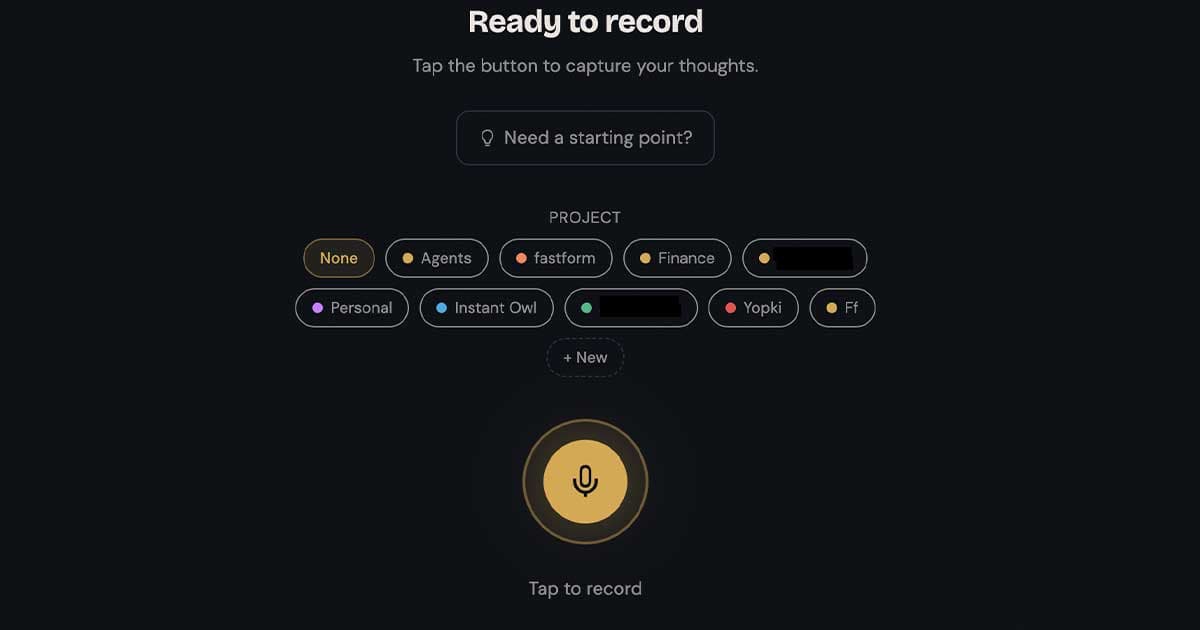
Full disclosure: InstantOwl is our product, and this blog belongs to it. It isn't built to transcribe an hour of other people's meeting, cloud recording or otherwise; the tools above already do that job well. It's built for your own two-minute debrief right after the call ends: what got decided, what you owe someone, what's due Thursday, said out loud in your own words before you move to the next thing.
That recording is only your voice, so there's no consent question to check first, and no VTT file to clean up afterward. For that specific job, our meeting notes guide covers the same after-the-call gap in more depth. InstantOwl is currently free to use.
Related reading
- Otter.ai: what it costs, what its free plan actually includes, and how to remove it from a call.
- Fireflies.ai: its real free-tier catch, exact pricing, and how to turn it off.
- How to take meeting notes: the template and cleanup habits that work when a bot isn't the right call.
Frequently asked questions
How do I get a transcript of a Zoom meeting?
Zoom generates one automatically if you are on a Pro, Business, Education, or Enterprise plan, record to the cloud, and have the audio transcript setting turned on, per Zoom's support article. Turn it on before the meeting starts. Zoom emails you once the cloud recording is ready, then again when the transcript finishes.
Can Zoom transcribe an existing recording?
No, not automatically. Zoom's transcription only runs on cloud recordings made after the audio transcript setting was already turned on, and it cannot add a transcript to a recording after the fact. The fix is to download the recording, the .m4a audio file if it's a local one, and upload it to a separate transcription tool.
Is Zoom transcription free?
No. Zoom's built-in transcription requires a paid Pro, Business, Education, or Enterprise account with cloud recording enabled, per Zoom's support article. Free-plan users, and anyone who recorded locally, have no native Zoom transcript option and need a separate upload-based tool instead.
Where does Zoom save transcripts?
Alongside the cloud recording, in VTT format, viewable in the web portal under Recordings & Transcripts, per Zoom's support article. A VTT file is a timestamped caption file you can open in any text editor or word processor, not a clean finished document.

Written by
Jim BreeseJim Breese is the founder of InstantOwl. He's spent 15 years building companies, from an Airbnb host community he founded and exited to growth leadership at venture-backed SaaS startups. He built InstantOwl because his best ideas kept arriving mid-walk, out of order, and half-finished.
Stop losing good ideas.
InstantOwl turns a rambling voice note into a clean, organized document in moments. Just talk. We'll organize it.
 Try InstantOwl free