Video to Text: The Built-In Paths First, Then the Real Tools
By Jim Breese · · Updated
How do you convert video to text?
Video to text works by pulling the audio track out of the video file, then transcribing that audio the same way any audio-to-text tool would. The video frames themselves are never read by the transcription engine.
This is the step every tool page for this keyword skips, and it explains three things at once. A 4K video transcribes no more accurately than a 480p one, because resolution never touches the audio. Every rule that applies to plain audio files (accuracy, background noise, accents) applies here too. And the number that actually limits you is file size, not video quality, since a long file at a modest resolution can still be a multi-gigabyte upload.
That last point matters more for video than for audio. A one-hour phone-camera video can run past a gigabyte even at ordinary settings, so the size caps below bind faster than they do for an audio file of the same length. Keep that in mind as you read the limits ahead.
Do you need a tool at all?
Two common situations need no upload, no account, and no tool at all. Check these before opening any converter.
If the video is a public YouTube upload, YouTube already generates a transcript for it. Open the video, expand the description, and use the transcript panel already built into YouTube, covered step by step in pulling a free transcript straight off YouTube.
If the video is a Zoom or Google Meet recording, the meeting platform generates its own transcript for cloud recordings on paid plans, no separate upload required. Our guide to Zoom's own transcript feature covers exactly where to find it.
If the "video" is really you talking into your phone's camera to think out loud, you almost certainly do not need a video tool at all. Recording your voice directly, without a camera running, gets you the same words with a smaller file and a faster transcript. Transcribing a voice memo already on your phone covers what your iPhone already does for free.
Only once none of those three apply, meaning you are holding an actual video file with no built-in transcript path, do the upload tools below become the right move.
The upload tools, verified
Five tools handle an actual video file, each with a different free limit, format list, and price. Every number below comes from the tool's own site, read live.
| Tool | Free tier | Paid tier | File cap | Video formats |
|---|---|---|---|---|
| TurboScribe | 3 files/day, 30 min each, no card | $10/mo billed yearly ($120/yr) or $20/mo monthly, unlimited | 10 hours / 5GB, 50 at a time | MP4, MOV, MPEG, WMV, AVI, 3GP, MKV, WEBM, VOB, RMVB, MTS, TS, and more |
| Uniscribe | 120 min/mo, 30 min per file, 3/day, no card | Basic $6/mo billed yearly ($72/yr) or $10 monthly, 1,200 min/mo | 5 hours / 5GB, 50 at a time | 20+ audio and video formats |
| HappyScribe | 10 minutes, one time, no card | Pricing not published on its video page | No file size limit stated | MP4, MOV, AVI, WebM, and more |
| ElevenLabs | 10,000 credits/mo, recurring, signup required | Credit-based, minutes-per-credit not published | No size or duration limit stated | MP4, MOV, AVI, MKV, plus MP3, WAV, FLAC audio |
| Word Transcribe | Needs Microsoft 365 | 300 uploaded minutes/mo included | Not published separately | .mp4 |
Per its own pricing page, TurboScribe's free tier is 3 transcripts a day at 30 minutes each, with no credit card required. Its Unlimited plan raises that to files up to 10 hours and 5GB each, 50 at a time, and openly runs on Whisper. TurboScribe lists the longest native video format list of the five, including less common ones like 3GP and MTS.
Per its own pricing page, Uniscribe's free tier is 120 minutes a month, each file capped at 30 minutes, 3 files a day, using what it calls a "standard accuracy" model. Its paid Basic tier costs $6 a month billed yearly ($72 a year) or $10 billed monthly, for 1,200 minutes a month, files up to 5 hours and 5GB, and a "premium" accuracy model. Extra minutes beyond the plan cost $10 per 500 minutes.
Per its own video-to-text page, HappyScribe names MP4, MOV, AVI, and WebM directly, plus source integrations for YouTube, Zoom, Google Meet, Microsoft Teams, and Loom links. Its free tier is 10 minutes, one time, no card, reused from its general transcription offer. No price appears on this page; it funnels toward a signup instead.
Per its own page, ElevenLabs, a company better known as an AI voice generator, names MP4, MOV, AVI, and MKV directly, alongside audio formats like MP3 and WAV. Its free tier is 10,000 credits every month, recurring, with signup required. ElevenLabs does not publish how many minutes a credit buys, so no minutes figure is printed here; verify directly with ElevenLabs before relying on one. In exchange, it includes word-level timestamps and automatic labeling for up to 32 speakers for free, more than any other tool in this table offers without paying.
If you already pay for Microsoft 365, Word's Transcribe feature accepts .mp4 files directly, per Microsoft's support pages, with 300 uploaded minutes a month included and speaker labels built in. There is no reason to open a separate account if this is already sitting inside a subscription you have.
One more option exists if all you need is the video cleaned up first: Adobe Podcast Studio's paid tier adds video support (MP4, MOV) on top of its audio tools, though its price was not shown on the pages we checked, so no dollar figure is printed here either.
Which tool fits your video?
Match the tool to your situation, not to whichever one ranks highest. Below about 20 hours a month, Uniscribe's metered pricing costs less; a two-hour lecture recording alone eats most of its 120 free minutes, so anything past occasional use pushes you toward its $6-a-month Basic tier or past it.
Past roughly 20 hours a month, the math flips: TurboScribe's flat $10-a-month Unlimited plan beats Uniscribe's per-minute pricing, since Uniscribe's $10-a-month Basic tier caps out at 1,200 minutes (20 hours) before extra charges apply. Below Uniscribe's free 120 minutes a month, neither tool needs to be paid for at all.
File size decides the rest for long recordings. TurboScribe and Uniscribe's paid tiers both cap at 5GB per file, but TurboScribe allows up to 10 hours in that space against Uniscribe's 5 hours, since TurboScribe supports lower-bitrate formats across a longer native list. A single long lecture or webinar recording fits TurboScribe's cap more comfortably than Uniscribe's.
If timestamps or speaker labels matter and you do not mind signing up, ElevenLabs is the only free tier here that includes both without paying. If the file is an MOV or MKV specifically, TurboScribe and ElevenLabs both name those formats directly; HappyScribe names MOV but not MKV, so do not assume it accepts one without checking first.
How accurate is video transcription really?
Accuracy in video transcription is exactly as accurate as the audio transcription underneath it, since the video frames are never part of the process. HappyScribe's own video-to-text page puts a plain number on its AI tier: 85% accuracy, with its human service marketed as the highest-accuracy option above it.
That 85% is the most honest number in this whole category, precisely because it is unflattering: most tools print a single high-nineties figure instead, and none of them come from an independent test. Treat all of them as claims, not measurements.
The practical rule holds regardless of tool: clean, single-speaker audio with no background noise transcribes close to the top of any vendor's claimed range. Crosstalk, music beds, and echo drag any engine, including the ones behind these five tools, toward the bottom of it.
Where InstantOwl fits
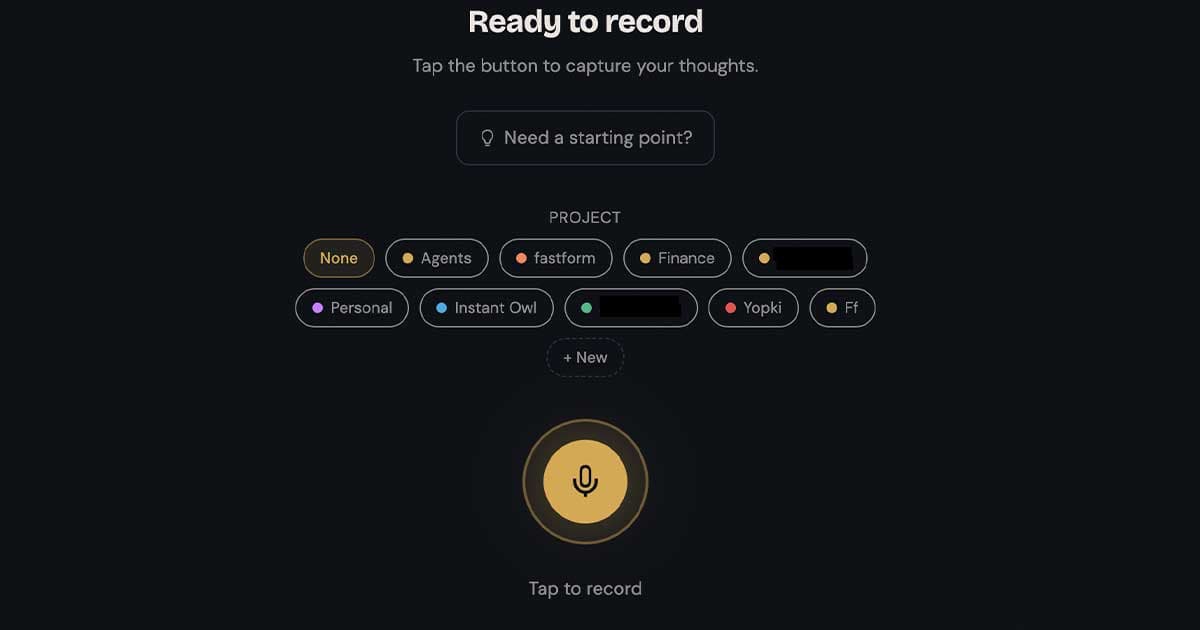
Full disclosure: InstantOwl is our product, and this is our blog. InstantOwl accepts video uploads (including MP4 and MOV, up to 150MB), processes the audio track, and turns what was said into an organized document with tasks pulled out. If you need subtitles or timestamped captions, the dedicated tools above are the better fit. And if the "video" you were about to record is really just you talking into a camera to get a thought out of your head, skip the camera and record a voice note instead. InstantOwl is currently free to use.
Related reading
- How to get a YouTube transcript: the free, built-in transcript panel for any public video, plus the tools that go further.
- How to transcribe voice memos: what your iPhone already does for free before any upload tool is needed.
- Voice notes: what a voice note is, and why a transcript alone still leaves you with a ramble to organize.
Frequently asked questions
How do I convert MP4 to text for free?
TurboScribe's free tier allows 3 files a day at 30 minutes each, with MP4 among its native video formats, per its own pricing page. Uniscribe's free tier allows 120 minutes a month, in files up to 30 minutes each, per its own pricing page. Neither requires a credit card.
Can I transcribe a video without uploading it?
Yes, for two common cases. A public YouTube video already has a free transcript panel built into YouTube itself, no upload required. A Zoom or Google Meet recording already generates its own transcript on paid plans, inside the meeting platform, before you ever touch a third-party tool.
What is the best video to text converter?
It depends on volume and format. TurboScribe's $10-a-month Unlimited plan is the honest pick for frequent or long videos (10-hour, 5GB files), per its own pricing page. ElevenLabs is the strongest free option if you want timestamps and speaker labels, per its own page. Uniscribe fits occasional use under its 120-minutes-a-month free tier.
How accurate is video transcription?
Video transcription is exactly as accurate as audio transcription, since the video frames are never read. HappyScribe's own video-to-text page puts its AI transcription at 85% accuracy, with its human service marketed as the higher-accuracy option above that. Treat vendor numbers as claims, not measurements: clean, single-speaker audio transcribes near the top of any tool's real range; crosstalk, music, and echo pull any engine toward the bottom.

Written by
Jim BreeseJim Breese is the founder of InstantOwl. He's spent 15 years building companies, from an Airbnb host community he founded and exited to growth leadership at venture-backed SaaS startups. He built InstantOwl because his best ideas kept arriving mid-walk, out of order, and half-finished.
Stop losing good ideas.
InstantOwl turns a rambling voice note into a clean, organized document in moments. Just talk. We'll organize it.
 Try InstantOwl free