Plaud vs Limitless: There Is Only One Left to Buy
By Jim Breese ·

You can no longer buy a Limitless Pendant
Meta acquired Limitless on December 5, 2025, and the Pendant stopped being sold to new customers, confirmed three separate ways: limitless.ai's own homepage, a letter from co-founder and CEO Dan Siroker, plus neutral reporting from TechCrunch and CNBC. The Limitless homepage is now the acquisition letter itself, not a product page.
If you searched "Plaud vs Limitless" expecting a live duel between two wearables, the honest answer has changed. There is one wearable left to buy between the two: Plaud. The real comparison today is what happened to Limitless, what its Pendant owners should do now, and whether a searcher choosing hardware in 2026 should buy a wearable at all.
This post covers all three, plus the historical comparison for anyone asking which was better while both were still on the market.
What happened to Limitless
Limitless was acquired by Meta on December 5, 2025, folded into Meta's Reality Labs wearables group. A Meta spokesperson told CNBC: "We're excited that Limitless will be joining Meta to help accelerate our work to build AI-enabled wearables." TechCrunch reported the company, formerly known as Rewind, had raised more than $33 million from investors including a16z, First Round, and NEA before the deal.
Dan Siroker's letter on limitless.ai states the customer terms directly: "We will continue to support existing Pendant customers for at least another year, but we'll no longer sell the Pendant to new customers. You'll no longer need to pay a subscription, and existing customers get the Unlimited Plan for free." The letter also confirms Limitless is "sunsetting non-Pendant functionality like Rewind," with regional availability changing too.
Service already ended in specific countries. Per limitless.ai, Limitless discontinued service in Brazil, China, the EU, Israel, South Korea, Turkey, and the UK, effective December 5, 2025, with affected users given until December 19, 2025 to export their data. The Rewind app's screen and audio capture was disabled that same day, December 19, 2025.
One more fact tells its own story: the official Limitless pricing page now returns a 404. That is not an oversight. It is what a discontinued product's site looks like.
What should Limitless Pendant owners do now
If you already own a Pendant, the support window is the fact that matters most: Limitless says it will keep supporting existing customers for at least another year from the December 2025 announcement, meaning into roughly December 2026. During that window, the subscription is free and every remaining owner is on the Unlimited plan, per limitless.ai.
Two practical steps follow from that. First, if you are in one of the discontinued regions (Brazil, China, the EU, Israel, South Korea, Turkey, or the UK), service is already off; exporting whatever data you can retrieve should already be done, since the December 19, 2025 export deadline has passed. Second, everyone else should treat the support window as a countdown, not a guarantee, and export their data before it ends rather than after.
There is a reported second-life option worth knowing about, not something we have verified ourselves: a Reddit user in r/PLAUDAI, who described being an EU owner cut off by the regional shutdown, said a third-party service called Omi can sync an orphaned Pendant "for a much lower annual fee," with its own API. That is one user's account, not a confirmed feature of Omi's service. Check Omi's own site for current Pendant support before switching over any data.
The historical comparison, briefly
For readers who want to know which device was actually better while both were sold, both had real strengths, according to a Reddit user in r/PLAUDAI who said he owned both a Plaud NotePin and a Limitless Pendant: the NotePin's practical limits were "limited to 5h recording chunks," speaker identification "only applicable to 3h (or less) recordings," and "poorer battery life than the pendant." He found more value on the Plaud side in "reminders creation, API... recording auto-segmentation, and battery life."
An independent two-reviewer comparison from winstonfrancois.com, with one reviewer testing each device, scored Plaud Note 8.0 out of 10 and the Limitless Pendant 7.8 out of 10, and flagged the Pendant's speaker identification as a weak point: "Speaker identification often gets it wrong, labeling others as Jason or duplicating action items."
On price, the Pendant sold for $199, including 20 free transcription hours a month; paid plans ran roughly $20 to $29 a month before Meta made subscriptions free for remaining owners, per third-party reviews (Limitless's own historical pricing page no longer lists exact figures for the paid tiers).
On privacy, Limitless's stance, while it was selling the Pendant, was that the person recording had to proactively get consent. Its privacy page required users to "proactively provide notice and seek consent from everyone they record." That is a policy requiring the wearer to act, not a feature that detects consent automatically, and Limitless made no automated-consent-detection claim on its site.
Plaud today
Plaud is the wearable still standing. The lineup, per plaud.ai, lists from $159 to $189: the Note and NotePin are $159, the NotePin S lists at $179 (on sale for $151.99 as of 2026-08-20), and the Note Pro lists at $189 (on sale for $159.99 as of the same date). Every device ships with a free Starter plan, 300 transcription minutes a month, forever, so nothing beyond the hardware is required to use it. Paid tiers add more minutes: Pro is $17.99 a month, or $8.33 a month billed annually, and Unlimited is $29.99 a month, or $19.99 a month billed annually.
Only the Note and Note Pro can record phone calls, through a Vibration Conduction Sensor that reads a phone speaker's vibrations when the device is magnetically attached to the back of the phone. The NotePin and NotePin S cannot record calls at all, per Plaud's own support pages. Our full Plaud review covers pricing, call recording, and real user complaints in more depth.
Being the only wearable of the three left independent matters beyond bragging rights. CNBC's coverage of the Meta deal noted that Bee, a competing wristband, was acquired by Amazon in July 2025, months before Meta bought Limitless. Of the wearables CNBC named as comparable at the time, Friend and Plaud, Plaud is the one still operating independently.
The lesson: AI hardware carries platform risk
Two of three notable AI wearable makers were acquired by Big Tech within six months of each other: Bee by Amazon in July 2025, then Limitless by Meta in December 2025. When the company behind a device exits, the device follows, whether that means sales stopping, support winding down, or regional service shutting off with two weeks' notice, as happened to Limitless's EU, UK, and other customers.
This is not a hypothetical risk. A Tom's Guide review of the Plaud Note raised the same concern in January 2025, eleven months before the Limitless deal: "What happens if Plaud decides no longer to support the app? With no internal transcription, you're left with only a voice recorder, and those aren't exactly in short supply." That exact scenario, a company folding its device's future into an acquisition, already played out at a rival brand.
Buying AI hardware means betting on the company's independence, not just its product. Software running on the phone you already own does not carry that same risk, because there is no separate device to strand if the company changes direction.
Do you need a wearable at all?
Not necessarily. Every device covered here, Plaud, the Limitless Pendant, and Bee before it, was built around recording other people: meetings, calls, or an entire day of ambient audio. None of them is shaped for the narrower job of capturing your own thoughts and getting back organized notes and tasks.
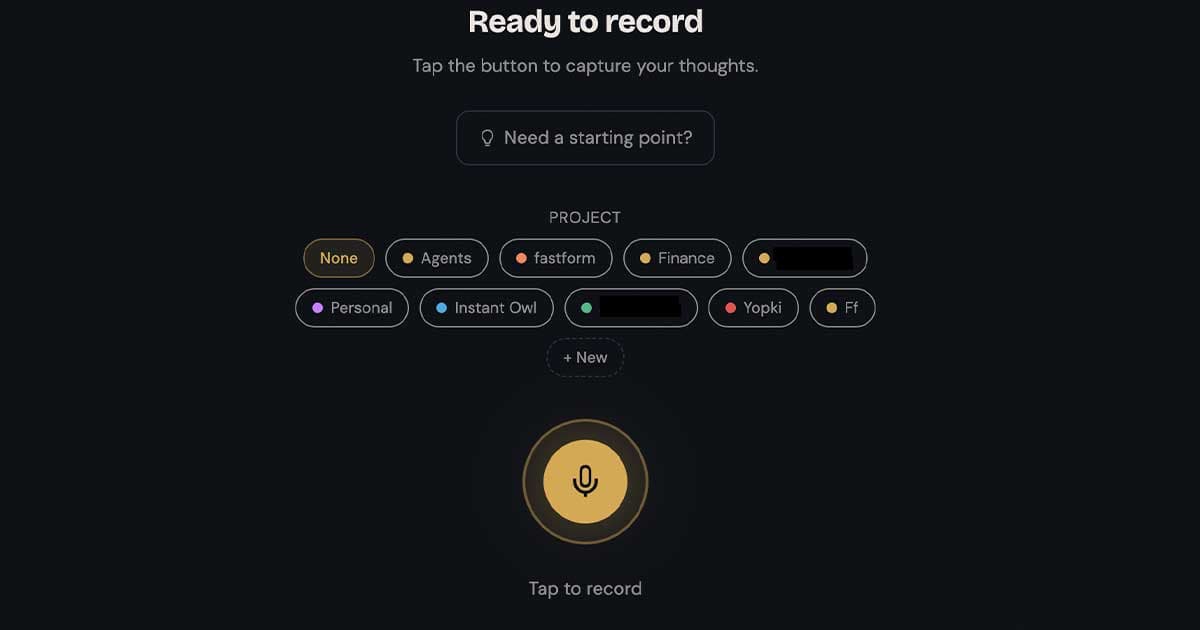
If that narrower job is your actual need, the phone already in your pocket, paired with the right software, does it without a purchase. Full disclosure: InstantOwl is our product, and this is our blog. InstantOwl turns a rambling voice note into organized output: tasks, notes, and drafts, not a device to charge, sync, and eventually replace. InstantOwl is currently free to use.
If you are weighing Plaud against a software-only meeting notetaker instead of a wearable, our Plaud vs Otter comparison covers that split directly. And if hardware is still the right call for your situation, our broader voice recorder roundup covers the built-in options on your phone before you spend on anything dedicated.
Related reading
- Plaud review: pricing, call recording, and real user complaints for the wearable still on the market.
- Plaud vs Otter: hardware versus a meeting-notetaker bot, compared directly.
- Voice recorder apps: the free, built-in recording options on the phone you already own.
Frequently asked questions
Is Limitless AI still available?
Not for new buyers. Meta acquired Limitless on December 5, 2025, and the company stopped selling the Pendant to new customers, per limitless.ai's own founder letter, TechCrunch, and CNBC.
What happened to the Limitless Pendant?
Meta acquired Limitless on December 5, 2025, to work on AI-enabled wearables inside its Reality Labs division. The Pendant stopped being sold, service was shut off in Brazil, China, the EU, Israel, South Korea, Turkey, and the UK, and the Rewind app's screen and audio capture was disabled on December 19, 2025, per limitless.ai.
Does the Limitless Pendant still work?
Yes, for existing owners outside the discontinued regions. Limitless says on its homepage it will keep supporting existing Pendant customers for at least another year, with no subscription fee and free access to the Unlimited plan.
What is the best Limitless alternative?
Among wearables, Plaud is the closest comparison still for sale, starting at $159, per plaud.ai. If your actual need is capturing your own thoughts rather than recording other people or your whole day, your phone plus voice-note software, like InstantOwl, does the job without buying hardware.

Written by
Jim BreeseJim Breese is the founder of InstantOwl. He's spent 15 years building companies, from an Airbnb host community he founded and exited to growth leadership at venture-backed SaaS startups. He built InstantOwl because his best ideas kept arriving mid-walk, out of order, and half-finished.
Stop losing good ideas.
InstantOwl turns a rambling voice note into a clean, organized document in moments. Just talk. We'll organize it.
 Try InstantOwl free