Day One vs Journey: What Changed Since Every Old Comparison Was Written
By Jim Breese ·

Which is better, Day One or Journey?
Day One is the better pick today for most people who want built-in privacy and full platform coverage: free end-to-end encryption on every tier, a genuinely usable web app, and an Android app that did not always exist. Journey is the better pick if you want an AI that can answer questions about your own entries and do not mind a cloud service having the plaintext access that requires.
That split is close to the opposite of the old advice. A widely shared 2020 comparison crowned Journey the winner on two fronts: broader platform support, including a real web app, and a lower price built around one-time purchases per platform. Day One, in that same comparison, was already sliding toward subscriptions and had dropped its old Dropbox sync for a proprietary storage system, a change the writer called going "right off the deep end" on pricing.
Neither verdict holds up in 2026. Day One has since shipped the web and Android access that used to be Journey's whole argument. Journey, meanwhile, moved its own pricing to a subscription and added an AI feature that sits awkwardly next to its encryption claims. If you found an old Day One vs Journey comparison and are working from it, the picture it describes has fully reversed.
Does Day One or Journey have better privacy?
The clearest difference between these two apps is not price or platform, it is what happens to your words after you write them.
Day One encrypts entries end to end, on every tier, including free. Only you can read what you wrote, not even Day One, per its own privacy language: "You own the data, we keep it safe." That protection does not depend on paying for Gold or Silver, so a free user gets the same guarantee a paying one does.
Journey also claims end-to-end encryption "throughout its Journey to the cloud." But Journey also sells Odyssey AI, a GPT-powered feature that answers questions about your past entries: "You can ask Odyssey AI questions about your own life, patterns, moods," per its own marketing. A journal cannot be both fully end-to-end encrypted, meaning unreadable by anyone but you, and searchable by a cloud AI that has to read the plaintext to answer. Journey does not explain how it reconciles the two claims, and neither is independently verified beyond what the company states about itself.
If a page nobody else can read matters most to you, that split alone should decide this comparison. If you want an AI you can ask about your own patterns and are comfortable with what that requires, the trade may be worth it to you.
How much do Day One and Journey cost in 2026?
Both apps charge a subscription now. Neither is the cheap one-time purchase that older comparisons still describe.
Day One's free tier covers unlimited text entries and journals. Its paid tiers are Silver at $49.99 a year and Gold at $74.99 a year, and audio recording plus transcription live behind the paid tiers, not the free one.
Journey charges $4.17 a month billed annually, about $50 a year, cancel anytime, for its Membership tier. That unlocks Journey Cloud Sync, capped at 10GB or 5,000 entries with a 200GB upgrade available, plus coaching programs and Odyssey AI. Journey's own site also advertises a lifetime purchase as an option, but its price is not shown on the page, only at checkout, so treat any number you see quoted elsewhere as unverified.
That lifetime option is worth flagging on its own, because it connects to the trust complaints covered below: Journey still sells a lifetime purchase today, even though some longtime users report an earlier version of that same kind of offer went badly for them. Whatever older comparison told you Journey was the one-time-purchase app and Day One was the subscription app, that framing is out of date on both sides now.
Which app has better web and Android access?
For a lot of people, this comparison comes down to one specific requirement: can I use this on a computer I do not control, like a locked-down work laptop where installing anything is off the table.
That is the exact situation described by an Android user in a journaling forum thread, weighing Day One against Journey because reliable web access was non-negotiable. Day One's web version is well liked in that same thread; a ten-year Day One user called it "vip" and said the web version "is very nice." Day One is available today on Android, iPhone, iPad, Apple Watch, Mac, and Windows.
Journey has never lacked platform breadth. It runs on Android, iOS, Mac, Windows, web, and Chrome OS, and always has. That used to be the whole argument for choosing Journey: it worked everywhere, while Day One's web and Android options lagged behind. The widely shared 2020 comparison made exactly that case, ranking Journey ahead specifically on cloud infrastructure and platform reach.
By 2026, Day One has closed that gap. It now ships the same category of web and Android access that Journey built its early reputation on. That single change removes the historical reason to default to Journey for cross-platform or web-only use, and it is the biggest reason a several-year-old comparison no longer applies.
What do longtime Journey users complain about?
Beyond features, some longtime users report real frustration with how Journey has changed over time. This is attributed sentiment from a public journaling forum thread, not a claim InstantOwl is making about Journey.
Some longtime users report that formatting options, once included, moved behind Journey's paid subscription. "Journey requires a premium sub to gain any formatting options; however, you don't need a sub for Day One," one user wrote, adding it was "ultimately why I left Journey."
Separately, some longtime users report that Journey previously sold a lifetime membership, then later revoked that lifetime access when it switched to its current subscription model, asking those members to start paying again. That is a serious complaint if accurate, and it is exactly why we treat Journey's current lifetime purchase option, mentioned above, as something to research further before buying rather than something we can vouch for ourselves.
None of this is InstantOwl asserting wrongdoing on Journey's part. It is what people who used the app for years are reporting in public, and it is worth knowing before committing to either a subscription or a lifetime purchase with either company.
Can you journal by voice in Day One or Journey?
Both apps support some form of audio, but neither is built voice first, and that difference matters if talking is how you actually process your day.
Day One lets you record voice messages and attach them to entries, and users describe using this while venting in the car on the way home, then listening back later. That is a real, organic voice-journaling habit that shows up unprompted among Day One's own users, not a feature the app markets heavily.
Journey supports uploading audio to entries too, but its homepage does not advertise a transcription feature for that audio, so a Journey voice entry likely stays a listenable recording rather than searchable text.
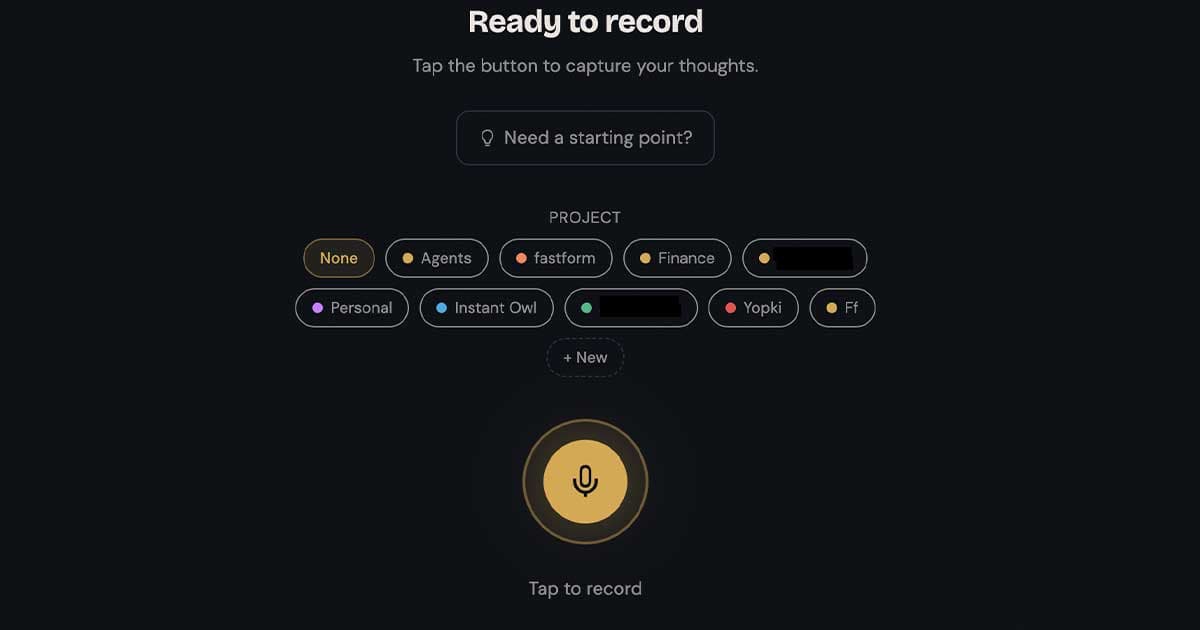
If talking through your day out loud is the habit you actually want, and less about which app wins on paper, voice journaling is worth reading on its own: what makes an audio journal stick, and why transcription, not just recording, is the feature that decides whether you ever go back and use what you said. Full disclosure: InstantOwl is our product, built for exactly that moment, turning a spoken ramble into organized written text instead of a folder of audio files nobody replays. It is currently free to use.
What if neither Day One nor Journey is right for you?
Both Day One and Journey are paid-first apps once you want more than the basics. If that is not what you are looking for, a few honest alternatives are worth knowing.
Apple Journal is free, built into iPhone, and end-to-end encrypted when stored in iCloud, per Apple's own description of the feature. Its tradeoff is that it only works inside Apple's ecosystem, so it is not an option on Android or if you need a Windows or web version.
Diarly is Apple-only as well, which rules it out for the same cross-platform reason Day One used to be ruled out.
If quiet, paper-style reflection is really what you are after rather than an app decision at all, morning pages is a pen-and-paper practice worth trying before paying for any app.
There is also a whole category of AI-guided reflection apps: tools built to prompt you and respond to what you write, the way Journey's Odyssey AI does, but built around that feature from the start instead of adding it on top of a traditional journal. We cover that category, including pricing and what each app's privacy policy actually promises, in AI journaling apps compared.
And if you came here without a firm favorite yet, journal prompts is a good place to start regardless of which app you end up choosing. The prompt in front of you matters more than the software behind it, especially in the first few weeks of a new habit.
Frequently asked questions
Is Day One or Journey better?
It depends on what you value most. Day One is the better pick if built-in end-to-end encryption on every tier, including free, matters to you. Journey is the better pick if you want an AI feature that can answer questions about your own past entries and you are comfortable trusting a cloud service with the plaintext access that requires.
Does Day One have end-to-end encryption?
Yes, and it applies on every tier, including the free one, per Day One's own privacy language. You do not need to pay for Silver or Gold to get the same encryption a paying user gets.
Does Journey still have a one-time purchase?
Journey's site advertises a lifetime purchase option, but its price is not listed on the page, only at checkout, so treat any number you see quoted elsewhere as unverified. Journey's main paid tier today is a $4.17 a month subscription billed annually, not a one-time purchase, which is a change from how older comparisons described it.
Can I journal by voice in Day One or Journey?
Yes in both, though neither is built voice first. Day One lets you record voice messages and attach them to entries. Journey supports uploading audio to entries too, but does not advertise a transcription feature for that audio on its homepage.

Written by
Jim BreeseJim Breese is the founder of InstantOwl. He's spent 15 years building companies, from an Airbnb host community he founded and exited to growth leadership at venture-backed SaaS startups. He built InstantOwl because his best ideas kept arriving mid-walk, out of order, and half-finished.
Stop losing good ideas.
InstantOwl turns a rambling voice note into a clean, organized document in moments. Just talk. We'll organize it.
 Try InstantOwl free