Voice Notes for Journalists: Capturing Interviews, Quotes, and the Consent Rules
By Jim Breese · · Updated
What do journalists actually need from voice notes?
Two things, and most ranking guides only cover one. First, an accurate capture of the interview itself, the words a source actually said, in order. Second, a fast way to turn a 40-minute recording into usable quotes and a summary before deadline, without re-listening to the whole thing.
Listicles tend to stop at the first job: which app records cleanest, which one syncs to the cloud. The second job, getting from raw audio to a filed story fast, is where deadline pressure actually lives. Both voice notes and dedicated transcription tools solve pieces of this, but neither is built specifically for the reporter's workflow: capture, verify, quote, file.
How do you capture an interview without losing the moment?
Record for accuracy and take handwritten notes at the same time, because note-taking alone splits your attention and recording alone gives you nothing to navigate by later. The two together solve different problems: one protects the exact words, the other protects your presence in the conversation.
Note-taking by hand while a source talks pulls focus away from the conversation itself, and a source who watches you scribbling can shift how they answer. Recording frees you to listen and ask better follow-up questions, but only if the source stays comfortable with visible gear in the room. Some sources self-censor the moment they notice a phone recording on the table between you.
A workflow used by journalists covering interview technique combines the two: run AI transcription as the safety net, take brief handwritten notes because writing by hand aids memory of what mattered, and jot a timestamp next to any answer that sounds like a usable quote. You are not trying to write down what was said, just marking where to find it later.
For the recording itself, Otter.ai is a common choice for real-time transcription during an interview, with a free tier that includes monthly limits, per Otter's own site. Hardware recorders are a second option: Plaud's pocket AI recorder claims compliance with ISO 27001, SOC 2, GDPR, and HIPAA standards, according to Plaud's own product page, and Philips sells the SpeechAir and Pocket Memo DPM8000 recorders for journalism, claiming up to 99% transcription accuracy when paired with Nuance Dragon, per Philips's dictation page for journalism. Those accuracy and compliance figures are each vendor's own marketing claim, not an independent test, so treat them as a starting point for comparison, not a guarantee. For the Otter-or-Plaud question specifically, our comparison of Plaud and Otter lines up what each route actually costs for interview work. One iOS recording app in this space is built specifically for discreet in-person capture but does not record phone calls at all, a limitation worth knowing before you rely on it for a phone interview.
Whichever recorder you pick, test it on a real conversation before a real interview depends on it. A dead battery, a muted mic, or a storage-full error mid-interview is the kind of failure you only discover once, at the worst possible time. A five-minute test call the day before costs nothing and catches most of these problems early.
What is the hardest technical problem in recording interviews?
Phone interviews, because both major mobile operating systems actively block the easy path. iOS blocks third-party apps from accessing call audio directly, and Android has removed that access from third-party apps too, so a call-recording app cannot simply tap into the call the way an in-person recorder taps into the room.
The built-in workaround on iPhone and Pixel phones is a native recording feature that plays an announcement telling both parties the call is being recorded, and that announcement cannot be turned off. For many interviews that is fine, even required, but it removes the option of a quiet background recording during a call.
This matters most on a one-shot source call: an interview that will not happen twice because the source is hard to reach, guarded, or only available once. If your recording setup fails on that call, there is no redo. A dedicated call-recording app like TapeACall is the common workaround for iPhone and Android, and it points users to guidance on whether recording a call is legal in their state, per TapeACall's own site. Test any phone-recording setup on a low-stakes call before you trust it with a source you cannot call back.
If you record and transcribe phone calls regularly, treat the setup as its own checklist, separate from your in-person recording kit: confirm the app actually captures the other party's audio, not just your side, before the interview that matters.
Is it legal to record an interview?
It depends on where you and the source are, and this is the angle most recording-app guides skip entirely. The federal Wiretap Act, 18 U.S.C. § 2511, sets a one-party consent baseline: if you are a party to the conversation, you can legally record it without telling the other person, under federal law. Most states and Washington, D.C. follow that same one-party rule.
About a dozen states require all parties to consent before a call or conversation can be recorded: California, Delaware, Florida, Illinois, Maryland, Massachusetts, Montana, New Hampshire, Oregon, Pennsylvania, and Washington are commonly counted as all-party states, Connecticut is all-party for phone calls specifically, and Nevada is all-party for phone calls only. Massachusetts goes further and bans secret recording outright, regardless of consent. When a source is in one state and you are in another, the safe rule of thumb is simple: if either party is in an all-party state, get consent or do not record.
Beyond what the law requires, the Society of Professional Journalists' ethics guidance favors transparency as standard practice: a simple "Do you mind if I record for accuracy?" before you hit record protects the interview and the relationship, even in a one-party state where you are not legally required to ask.
None of this is legal advice, and recording laws change and vary by exact circumstance. The Reporters Committee for Freedom of the Press Reporter's Recording Guide is the authoritative, state-by-state source. Check it for your specific state before you record, especially for a call that crosses state lines.
How do you turn an interview into a filed story fast?
Pull the claims, the exact quotes, and a summary, because re-listening to a full interview on deadline is not an option. A 40-minute conversation does not need to be replayed start to finish. It needs to be searched for the handful of moments that matter for the story you are actually writing.
This is the gap between a raw transcript and a usable one. A transcript gives you every word in order. It does not hand you a summary of what the source actually argued, or a short list of the claims worth fact-checking, or the two quotes that will anchor your lede. Getting from transcript to those things by hand, scrolling and highlighting on deadline, is where the real time goes.
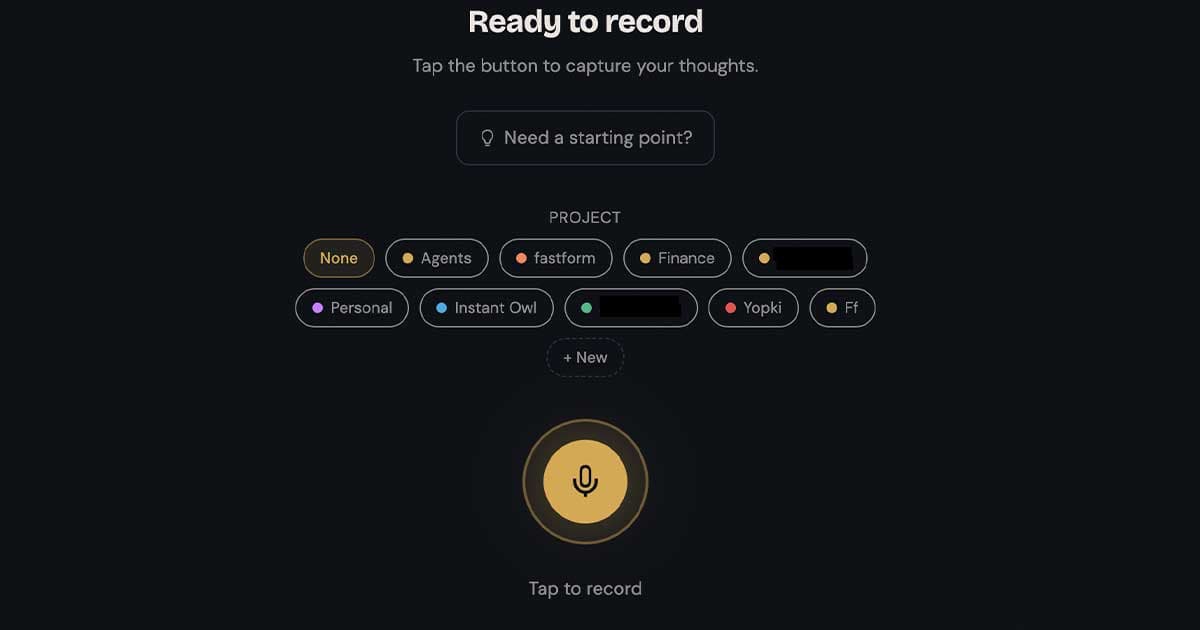
Full disclosure: InstantOwl is our product, and this is our blog. InstantOwl is built for capturing your own rambling field notes and interview debriefs, then turning that recording into a note-taking format you can actually use fast: a summary, a list of action items, or a quick email draft, all built-in output formats. It is honest about what it is not: not a court-grade evidentiary recorder, and not a diarization-guaranteed transcription service that promises to separate speakers perfectly. For any quote you plan to publish under a source's name, verify the exact wording against the original audio yourself. If you already have a full interview transcript and want it organized into claims, quotes, and a summary fast, that is exactly the gap InstantOwl fills, and it is currently free to use. Capture your notes and get them organized.
You are not locked into a new archive to get this. InstantOwl sits in front of whatever you already use to record and store interviews, whether that is Otter, a hardware recorder, or your phone's own Voice Memos app. Talk through your notes, and it organizes what you said. Your existing recording setup does not have to change, and neither does the rest of your workflow: file the story the same way you always have, just with the quotes and summary already pulled out for you instead of buried in an hour of audio.
Frequently asked questions
What is the best note-taking app for journalists?
There is no single best app. It depends on the job. For in-person interviews, a real-time transcription app plus handwritten timestamps works well. For phone interviews, you need a dedicated call-recording app on top of your regular recorder. Whatever you use, verify exact quotes against the audio before filing.
How do you take notes like a journalist?
Most working reporters use a hybrid: record the full interview for accuracy, take handwritten notes at the same time because writing by hand helps you remember what mattered, and jot a timestamp next to any quote you might use. The recording is the safety net; the handwritten notes are the map back into it.
Is it legal to record an interview?
It depends on where you and the other party are. Federal law and most states require only one party's consent, meaning you can legally record your own interview without telling the other person. About a dozen states require all parties to consent. This is not legal advice; check the Reporters Committee for Freedom of the Press guide for your state before you record.
How do journalists transcribe interviews?
Most reporters run the recording through an AI transcription tool for a fast first draft, then check the exact wording of any quote they plan to publish against the original audio. Automated transcripts are a starting point for finding quotes fast, not a final, publishable record on their own.

Written by
Jim BreeseJim Breese is the founder of InstantOwl. He's spent 15 years building companies, from an Airbnb host community he founded and exited to growth leadership at venture-backed SaaS startups. He built InstantOwl because his best ideas kept arriving mid-walk, out of order, and half-finished.
Stop losing good ideas.
InstantOwl turns a rambling voice note into a clean, organized document in moments. Just talk. We'll organize it.
 Try InstantOwl free