OPUS to Text: Transcribing WhatsApp and Telegram Voice Files
By Jim Breese · · Updated
What is an OPUS file?
An OPUS file is a voice recording compressed with the Opus codec, the same codec behind WhatsApp and Telegram voice notes. Per opus-codec.org, Opus is "a totally open, royalty-free, highly versatile audio codec," standardized by the IETF as RFC 6716. It combines technology from Skype's SILK codec and Xiph.Org's CELT codec, and the project describes it as "unmatched for interactive speech and music transmission over the Internet," used for voice calls, videoconferencing, in-game chat, and even live music performances.
Most .opus files you actually hold are Opus audio wrapped inside an Ogg container, the same container behind .ogg files. That is not a guess. Meta's own WhatsApp Business Platform documentation requires voice messages to be ".ogg files encoded with the OPUS codec," or "voice message transcription will fail." Telegram's Bot API docs describe a voice recording the same way: audio "in an .OGG container encoded with OPUS," though bots there can now also send voice messages as .MP3 or .M4A files.
Same codec, same container, two different apps handing you the file under two different extensions: WhatsApp exports .opus, Telegram uses .ogg. A file named PTT-20260501-WA0003.opus and a Telegram voice message ending in .oga are, underneath, the same kind of file. Our OGG to text guide covers that container story from the other direction, since a .ogg file can also hold non-voice Vorbis audio like a music rip.
The fastest fix: rename it to .ogg
Renaming voicenote.opus to voicenote.ogg is the fastest way to get an OPUS file past an extension-based upload filter, because the file's actual bytes never change, only the label does. Filext's own file-signature analysis of these files found the header markers OggS, OpusHead, and OpusTags inside them, the same markers any Ogg-Opus file carries regardless of what its extension says.
InstantOwl accepts .ogg but does not currently list .opus in its upload picker, per its own file upload docs. Renaming the extension is the step that lets a WhatsApp or Telegram voice note through: change ".opus" to ".ogg" on the file, then upload it. InstantOwl is currently free to use, and once the file is in, it runs the same transcription and organizing pipeline as any other upload.
This relabels a file, it does not touch the audio inside it. Desktop players like VLC open Opus audio regardless of which extension is on the file, since they read the header, not the label, which is the same reason the rename trick works for upload pickers too.
Which tools accept OPUS directly?
Some tools accept .opus without any renaming. TurboScribe lists OPUS by name in its supported formats, alongside "MP3, M4A, MP4, MOV, AAC, WAV, OGG, OPUS, MPEG, WMA, WMV, AVI, FLAC, AIFF, ALAC, 3GP, MKV, WEBM, VOB, RMVB, MTS, TS, QuickTime, and DivX," per its own page. Its free tier gives 3 free transcripts a day, no credit card required; its Unlimited plan is $10 a month billed yearly ($120 a year) or $20 a month, with uploads up to 10 hours.
SpeakNotes has a dedicated free OPUS tool: no signup, files up to 5MB for free users, 50+ languages, and files it says are "processed securely and not stored permanently." WhatsApp voice notes run roughly 16 kbps, so 5MB comfortably holds a long one, though the same 5MB cap would barely cover a minute of music-quality audio elsewhere.
For a no-install convert path instead of a transcriber, converter.app's opus-to-mp3 tool is free and browser-based, handles up to 20 files at once with a selectable MP3 bitrate, and removes files within 120 minutes of conversion, per its own site. It is operated by Converter App OÜ, based in Estonia.
One surprise worth knowing: Microsoft Word's Transcribe feature does not accept OPUS at all. Per Microsoft's support documentation, it "currently supports .wav, .mp4, .m4a, .mp3 formats," full stop. If you already pay for Microsoft 365 and hoped to drop a WhatsApp voice note straight into Word, rename or convert it first.
What is a WAPTT file?
A .waptt file is not a separate format. It is a WhatsApp voice note with a second extension tacked onto an Opus-in-Ogg file, most often shaped like PTT-20180601-WA0001.opus.waptt. Per filext.com's WAPTT page, "the WAPTT file is used by WhatsApp to store audio messages. It is mainly seen as a WhatsApp Opus audio file that uses the Ogg container." Filext locates these files "on your iPhone or Android phone located in folder WhatsApp/Media/WhatsApp Voice Notes/."
Filext's own signature analysis backs this up: "95% of all WAPTT files are based on the popular Ogg file format," with the OggS, OpusHead, and OpusTags markers turning up inside them. The remaining 5% carry an AAC signature instead, named the same way (PTT-...aac.waptt), which lines up with Meta's own audio-format table listing AAC alongside OGG as an accepted WhatsApp audio type.
Fixing a .waptt file takes the same two moves already covered here. Strip or rename the trailing .waptt, leaving a normal .opus (or occasionally .aac) file underneath, then either rename that to .ogg for upload or run it through a converter. For everything else WhatsApp's own transcription feature can and cannot do, see our full guide to transcribing WhatsApp voice notes.
How do you convert an OPUS file, and can you translate it?
The most reliable convert path is ffmpeg, a free command-line tool: ffmpeg -i voice-note.opus voice-note.mp3 turns an Opus file into an MP3 with no extra flags needed. Per ffmpeg's own documentation, the output format "is normally auto detected for input files and guessed from the file extension for output files," so naming the output file voice-note.mp3 (or voice-note.wav) is all it takes. The same one-line shape works for .aac, .flac, and .ogg inputs too.
ffmpeg is not preinstalled on macOS or Windows; the project itself "only provides source code" and points users to third-party builds. On a Mac, one command through Homebrew handles it: brew install ffmpeg. If a terminal is not appealing, converter.app's free browser-based opus-to-mp3 tool covers the same job with no install.
Translating an OPUS voice message into English is a two-step process, not a one-click one. First, transcribe it, with any of the tools above, which return text in whatever language was actually spoken. Then translate that text separately. None of the tools covered here verified full voice-to-English translation as a built-in feature, so pasting the transcript into a dedicated translation tool is the honest second step, not a shortcut being skipped.
Related reading
- Transcribing WhatsApp voice notes: what WhatsApp's own transcription feature does and does not do, plus the third-party options.
- OGG to text: the container story from the other side, since a .ogg file can hold Vorbis music as easily as an Opus voice note.
- Voice notes: sending, keeping, and actually using the voice notes you record.
Frequently asked questions
How do I convert an OPUS file to text?
Upload it to a tool that accepts .opus directly, like TurboScribe or SpeakNotes' free OPUS tool, or rename the file's extension from .opus to .ogg first, since the audio is Opus wrapped in an Ogg container and the bytes never change. InstantOwl accepts .ogg, not .opus, so renaming is the step that lets a WhatsApp or Telegram voice note through.
What is a WAPTT file?
A .waptt file is a WhatsApp voice note with a second extension attached, most often an Opus-in-Ogg file named like PTT-20180601-WA0001.opus.waptt, per filext.com's file-extension database. Strip or rename the .waptt suffix and treat what remains as a normal .opus (or occasionally .aac) file.
Can I rename a .opus file to .ogg?
Yes, for upload purposes. WhatsApp's own developer documentation confirms voice notes are '.ogg files encoded with the OPUS codec,' so an .opus file already holds Ogg-container bytes, and renaming it to .ogg only changes the label, not the audio, which is what lets it through tools and pickers that check the file extension.
How do I translate an OPUS voice message to English?
Transcribe it first, using a tool that accepts .opus or a renamed .ogg file, then translate the resulting text separately. Transcription tools return text in whatever language was spoken, and translating that text into English is a distinct second step, not something the transcription itself does.

Written by
Jim BreeseJim Breese is the founder of InstantOwl. He's spent 15 years building companies, from an Airbnb host community he founded and exited to growth leadership at venture-backed SaaS startups. He built InstantOwl because his best ideas kept arriving mid-walk, out of order, and half-finished.
Stop losing good ideas.
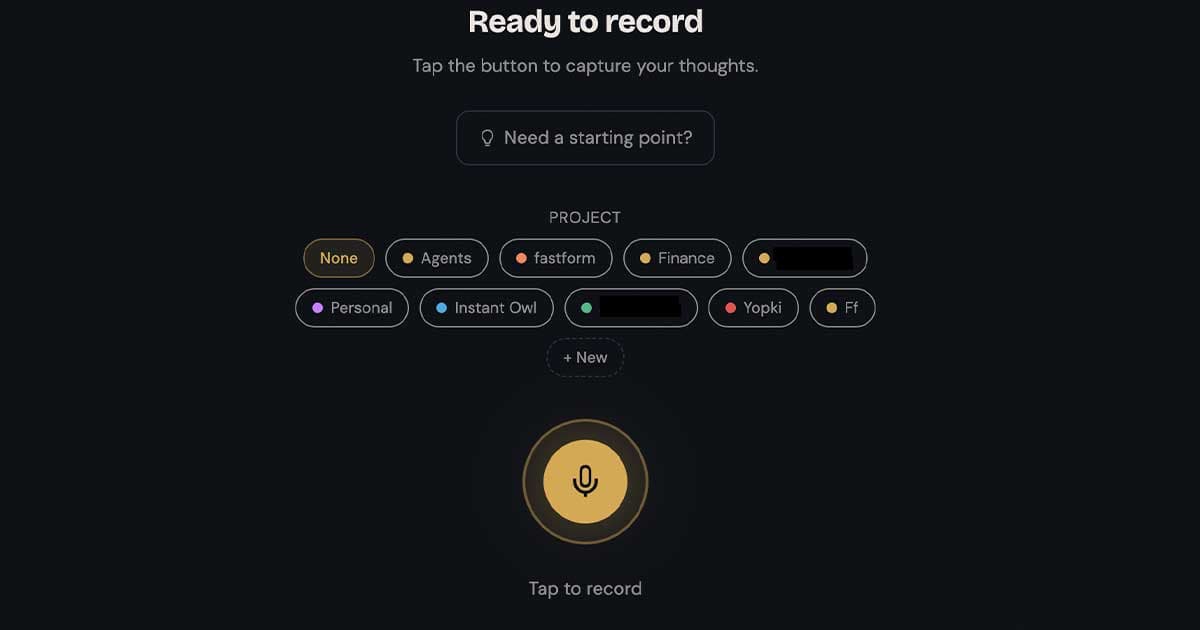
InstantOwl turns a rambling voice note into a clean, organized document in moments. Just talk. We'll organize it.
 Try InstantOwl free