Text to Speech: The Built-Ins First, Then the Tools Worth Paying For
By Jim Breese ·

How do you turn text into speech?
Before installing anything, check what your device already does for free. iPhone and Windows both ship a built-in text to speech option, and for most everyday reading, that is all you need.
On iPhone, go to Settings, then Accessibility, then Read & Speak. Apple renamed this section in iOS 26; if your phone is on iOS 18 or earlier, look for Spoken Content instead, since the feature and its options are the same under either name, per Apple's support guide. Turn on Speak Selection to select any text and tap Speak, or turn on Speak Screen to swipe down with two fingers from the top of the screen and have the whole screen read aloud, with an on-screen controller for pause, rate, and skipping forward or back. You can also just say "Speak screen" to Siri. Apple's Accessibility Reader adds a full-screen read-and-listen view with font, layout, and background controls, plus an autoplay option. Under Options, you can pick the voice and dialect, set a speaking rate, and choose a highlight color for the words being spoken.
On Windows, there are two different built-ins for two different jobs. Narrator is the full screen reader, built into Windows 10 and 11 with no install needed, per Microsoft's support guide. Toggle it on or off with the Windows key plus Ctrl plus Enter. It reads text, on-screen elements, and web pages, with adjustable speech rate, voice, and verbosity, plus a scan mode for reading documents. Narrator is powerful but built for full accessibility navigation, which is more than most people need just to hear an article read back. For that lighter job, use Read Aloud in Microsoft Edge: open the menu (More Tools, then Read Aloud), or press F9 to enter Reading mode. Read Aloud is a simple toolbar with play, skip to the next or previous paragraph, and voice options, and it works on both Windows and Mac, per Microsoft's support guide.
What are the best free text to speech tools online?
Once you outgrow the built-ins, two free web tools cover most needs, and they solve different problems. Text2Speech.org is the fully free option. Its own site states plainly that the service is free and the speech files can be used for any purpose, including commercial uses. The tradeoff is a 4,000-character limit per conversion and a smaller voice roster: an English male and female voice, a Scottish-accented male voice, plus Hindi and Marathi options, all on the more basic, robotic end of the quality spectrum. You still get an MP3 download and five speed settings, and there is no premium tier to upsell you into.
NaturalReader is the more polished free reader, with a different set of tradeoffs. Per NaturalReader's own help center, the free plan gives unlimited listening with its Free Voices, but only 4,000 shared characters a day with its higher-quality Plus and Cloned voices, which is roughly a 3-minute read. There is no MP3 download at all on the free plan, only in-browser listening. NaturalReader also reads PDFs, images, and web pages, and its mobile app adds an OCR camera scanner for physical books, per its site.
The difference in one sentence: Text2Speech.org gives you a small, free, downloadable, commercially usable file with basic voices. NaturalReader gives you better voices and more input formats, but gates its best voices behind a tiny daily cap and blocks downloads entirely on free.
What does paid text to speech cost?
NaturalReader's paid personal plans exist mainly to remove the free plan's daily cap and unlock MP3 downloads, per its pricing page. Lite runs $13.90 a month or $79 a year and includes 1 million MP3 characters a month with Lite voices. Plus runs $20.90 a month or $119 a year and adds cloning of up to two voices. Pro runs $25.90 a month or $159 a year and adds Pro voices and Reading Styles on top of Plus. One restriction carries across every personal tier: downloaded MP3s are licensed for personal use only, per NaturalReader's help center. If you need to publish TTS audio commercially, its separate Commercial product is the one built for that, not the Personal plans above.
Is there a text to speech option for developers?
Yes, and it is priced differently from every consumer tool above: by the character, through an API, not through a monthly plan. Google Cloud Text-to-Speech bills per character sent for synthesis, with spaces, newlines, and most SSML tags all counting toward the total, per its pricing page. Standard and WaveNet voices include 4 million free characters a month, then $4 per million characters after that. Neural2 voices include 1 million free characters a month, then $16 per million. Studio voices, the most expensive consumer-facing tier, include 1 million free characters a month, then $160 per million.
This is not a tool for reading one article aloud. It is built for products that generate speech at scale, like an app narrating thousands of pages of user content. The free tier is generous if you stay on Standard or WaveNet voices, but it does require a billing-enabled Google Cloud account before you can use it at all.
Which text to speech tool should you use?
Match the tool to the job, not to whichever one ranks first in a search. If you just want an article or a PDF read back to you right now, use what is already on your device: iOS Read & Speak or Windows Read Aloud, both free, no account needed.
If you need a downloadable MP3 and might use it commercially, Text2Speech.org is the honest free pick, with the tradeoff being smaller, more basic voices and a 4,000-character-per-conversion limit. If you want better voices and more input formats (PDFs, images, web pages) and only need to listen rather than download, NaturalReader's free tier covers that, as long as you can live with 4,000 characters a day on its better voices.
If NaturalReader's free cap is the only thing in your way, its $13.90-a-month Lite plan removes it and adds downloads, though remember those MP3s stay personal-use only under every personal-tier license. And if you are building a product rather than reading your own content, Google Cloud's per-character API pricing, with its large free tier on Standard and WaveNet voices, is the right shape of tool entirely.
One honest note worth remembering: the no-name free tool gives away commercial rights that the well-known free tools do not. Text2Speech.org lets you use its output commercially at no cost. NaturalReader, a much more capable and popular product, restricts its personal-plan downloads to personal use only, even on paid tiers. Bigger brand and better voices do not automatically mean fewer restrictions.
Where InstantOwl fits
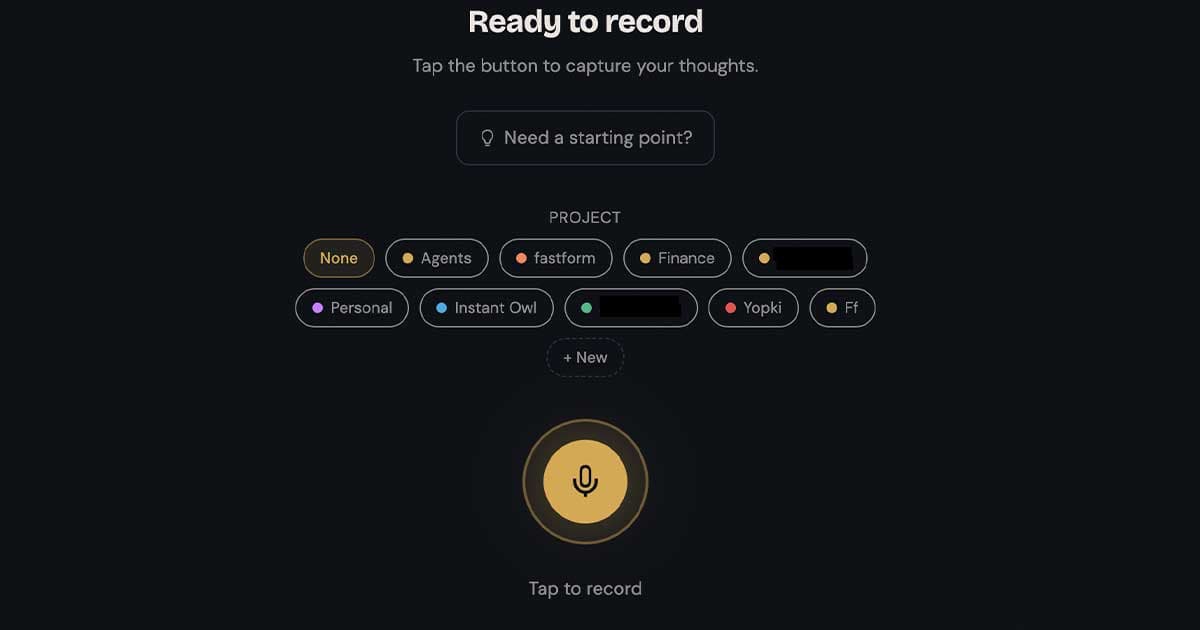
InstantOwl works in the opposite direction from every tool in this post: instead of turning text into speech, it turns your spoken voice into organized, written text. If capturing what you say (not reading text back to you) is the problem you actually have, see voice notes for how that side works.
Frequently asked questions
What is the best free text to speech?
NaturalReader is the strongest all-around free option: free voices are unlimited, though premium voice tiers cap at 4,000 characters a day, roughly a 3-minute read, and the free plan has no MP3 download, per NaturalReader's help center. Text2Speech.org is the more open free option: convert up to 4,000 characters at a time, download the MP3, and use it commercially, per its own site, though the voices are more basic.
Does my phone have text to speech?
Yes. On iPhone, go to Settings, then Accessibility, then Read & Speak (called Spoken Content on iOS 18 and earlier), or swipe down with two fingers from the top of the screen for Speak Screen, per Apple's support guide. On Windows, press the Windows key plus Ctrl plus Enter to toggle Narrator, a full screen reader built into Windows 10 and 11, per Microsoft's support guide, or use Read Aloud in Edge for a lighter, page-only option.
Can I use text to speech commercially?
It depends on the tool. Text2Speech.org's own site states its audio files are free to use for any purpose, including commercial uses. NaturalReader's help center says the opposite for its personal plans: MP3s made with Lite, Plus, or Pro voices are strictly permitted for personal use only, and commercial use requires its separate Commercial product. Google Cloud Text-to-Speech is licensed as a developer API and is built for commercial products, billed per character.
What is the most natural text to speech voice?
There is no independent, lab-tested ranking to point to here, only what each vendor's own tier promises. Google Cloud's Studio and Chirp 3 HD voices sit at the top of its lineup and cost the most per character, per its pricing page. NaturalReader's Pro plan adds Reading Styles and its higher voice tiers. Treat any single company's most natural claim as marketing copy until you test a sample yourself.
Related reading
- Voice notes: the opposite direction, turning your spoken voice into text instead of text into speech.
- Dictation software: the best speech-to-text tools, for typing by talking instead of listening to text.
- AI voice generator: tools that generate a spoken voice from a script, including cloning options.
- InstantOwl: turns rambling voice notes into organized text and tasks, currently free to use.
Frequently asked questions
What is the best free text to speech?
NaturalReader is the strongest all-around free option: free voices are unlimited, though premium voice tiers cap at 4,000 characters a day, roughly a 3-minute read, and the free plan has no MP3 download, per NaturalReader's help center. Text2Speech.org is the more open free option: convert up to 4,000 characters at a time, download the MP3, and use it commercially, per its own site, though the voices are more basic.
Does my phone have text to speech?
Yes. On iPhone, go to Settings, then Accessibility, then Read & Speak (called Spoken Content on iOS 18 and earlier), or swipe down with two fingers from the top of the screen for Speak Screen, per Apple's support guide. On Windows, press the Windows key plus Ctrl plus Enter to toggle Narrator, a full screen reader built into Windows 10 and 11, per Microsoft's support guide, or use Read Aloud in Edge for a lighter, page-only option.
Can I use text to speech commercially?
It depends on the tool. Text2Speech.org's own site states its audio files are free to use for any purpose, including commercial uses. NaturalReader's help center says the opposite for its personal plans: MP3s made with Lite, Plus, or Pro voices are strictly permitted for personal use only, and commercial use requires its separate Commercial product. Google Cloud Text-to-Speech is licensed as a developer API and is built for commercial products, billed per character.
What is the most natural text to speech voice?
There is no independent, lab-tested ranking to point to here, only what each vendor's own tier promises. Google Cloud's Studio and Chirp 3 HD voices sit at the top of its lineup and cost the most per character, per its pricing page. NaturalReader's Pro plan adds Reading Styles and its higher voice tiers. Treat any single company's most natural claim as marketing copy until you test a sample yourself.

Written by
Jim BreeseJim Breese is the founder of InstantOwl. He's spent 15 years building companies, from an Airbnb host community he founded and exited to growth leadership at venture-backed SaaS startups. He built InstantOwl because his best ideas kept arriving mid-walk, out of order, and half-finished.
Stop losing good ideas.
InstantOwl turns a rambling voice note into a clean, organized document in moments. Just talk. We'll organize it.
 Try InstantOwl free